Navigating to Dream Island is a UX case study focused on designing a unified finance experience for people living in fast-growing Indian cities individuals who actively manage their money, yet struggle to see the bigger picture of their financial lives.
The project set out to explore how a single, well-designed platform could replace a scattered mix of financial tools and help users move from uncertainty to confidence from drifting across multiple apps to navigating with one clear compass.
Navigating to Dream Island is a UX case study focused on designing a unified finance experience for people living in fast-growing Indian cities individuals who actively manage their money, yet struggle to see the bigger picture of their financial lives.
The project set out to explore how a single, well-designed platform could replace a scattered mix of financial tools and help users move from uncertainty to confidence from drifting across multiple apps to navigating with one clear compass.
Timline:
Timline
6 months
6 months
Members:
6 People
My Role
My Role
UX Designer (User Research, Research Synthesis, Problem Framing, User Flows, Usability Testing)
UX Designer (User Research, Research Synthesis, Problem Framing, User Flows, Usability Testing)
Key Deliverables
Key Deliverables
Market & secondary research, Primary user research (interviews & surveys), Personas & insight mapping, User flows & information architecture, Wireframes & usability testing insights, Final UX direction
Market & secondary research, Primary user research (interviews & surveys), Personas & insight mapping, User flows & information architecture, Wireframes & usability testing insights, Final UX direction
This was not just a design, but an exploration of a deeper truth: What if managing money felt less like surviving a storm, and more like sailing with confidence toward a known destination?
Once upon a time...
In fast-growing cities across India, managing money had become a quiet, everyday struggle. People were earning, saving, spending, and investing yet their financial lives felt scattered. Payments lived in one app, Investments in another, Expenses tracked somewhere else and if at all.
Each app promised progress. Together, they created confusion. Instead of moving steadily toward their Dream Island financial freedom, stability, and a better life people found themselves juggling multiple tools, switching screens, and second-guessing decisions. Not because they lacked discipline, but because they lacked a clear view. They weren’t failing to manage money. They were navigating without a map.
World Around Them
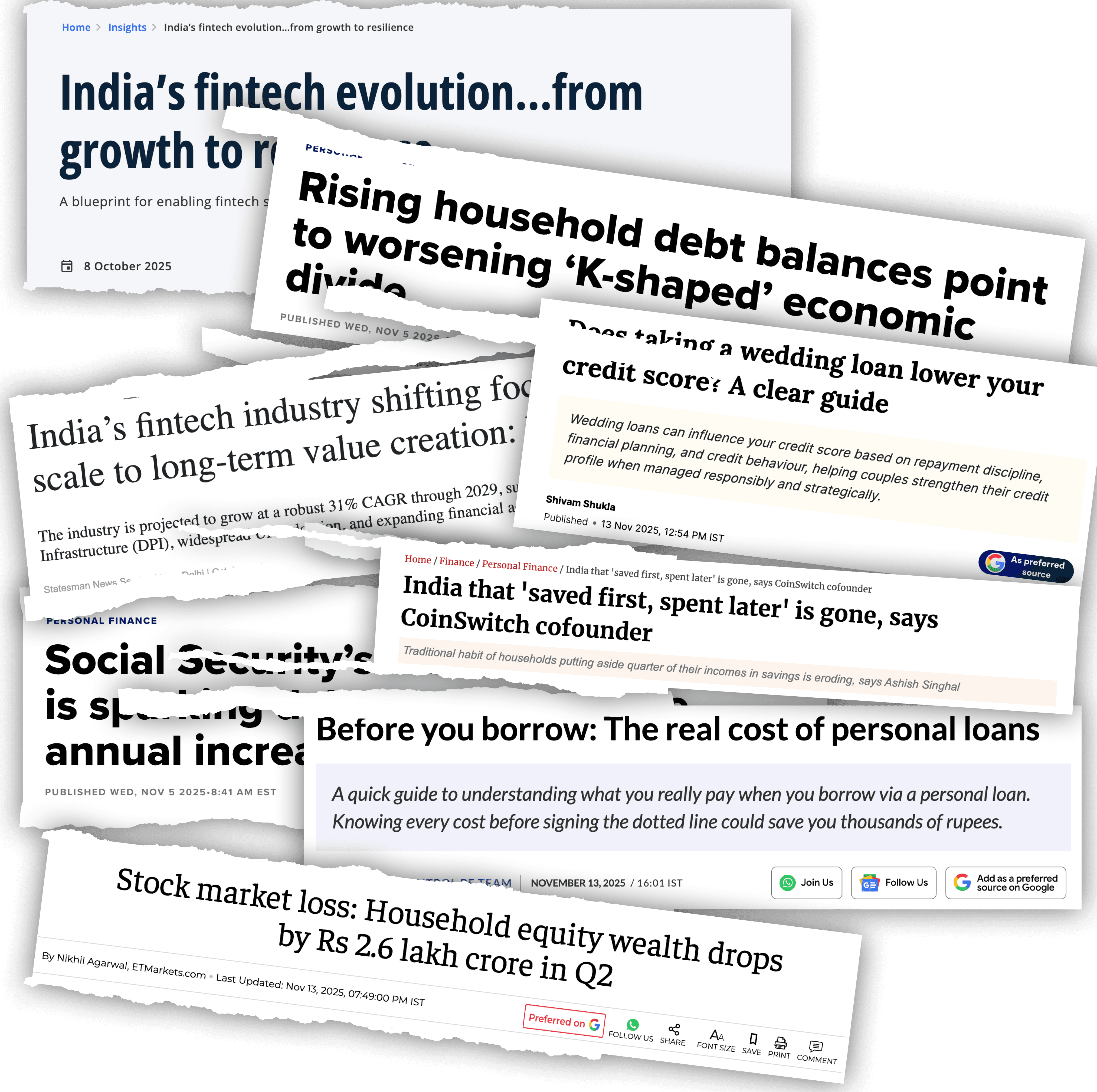
Real stories of how urban Indians were being pulled under by disconnected finance tools.
Why This Journey Matters
The financial industry is under growing pressure.
Institutions face a shortage of qualified advisors, rising data-security risks with increased digital usage, and tighter regulatory scrutiny driven by household debt. These factors strain operations, trust, and scalability.
At the same time, users manage their finances across fragmented apps. Budgeting tools see low adoption due to complexity and poor alignment with real financial behaviour, leaving people overwhelmed rather than supported.
Together, these challenges highlight the need for more unified, clearer financial experiences that work for both users and the businesses behind them.
As the challenges became clearer, six of us came together each bringing a different perspective, but driven by the same question. What would it take to design a financial experience that feels navigable, not overwhelming?
Surveying the Waters Ahead
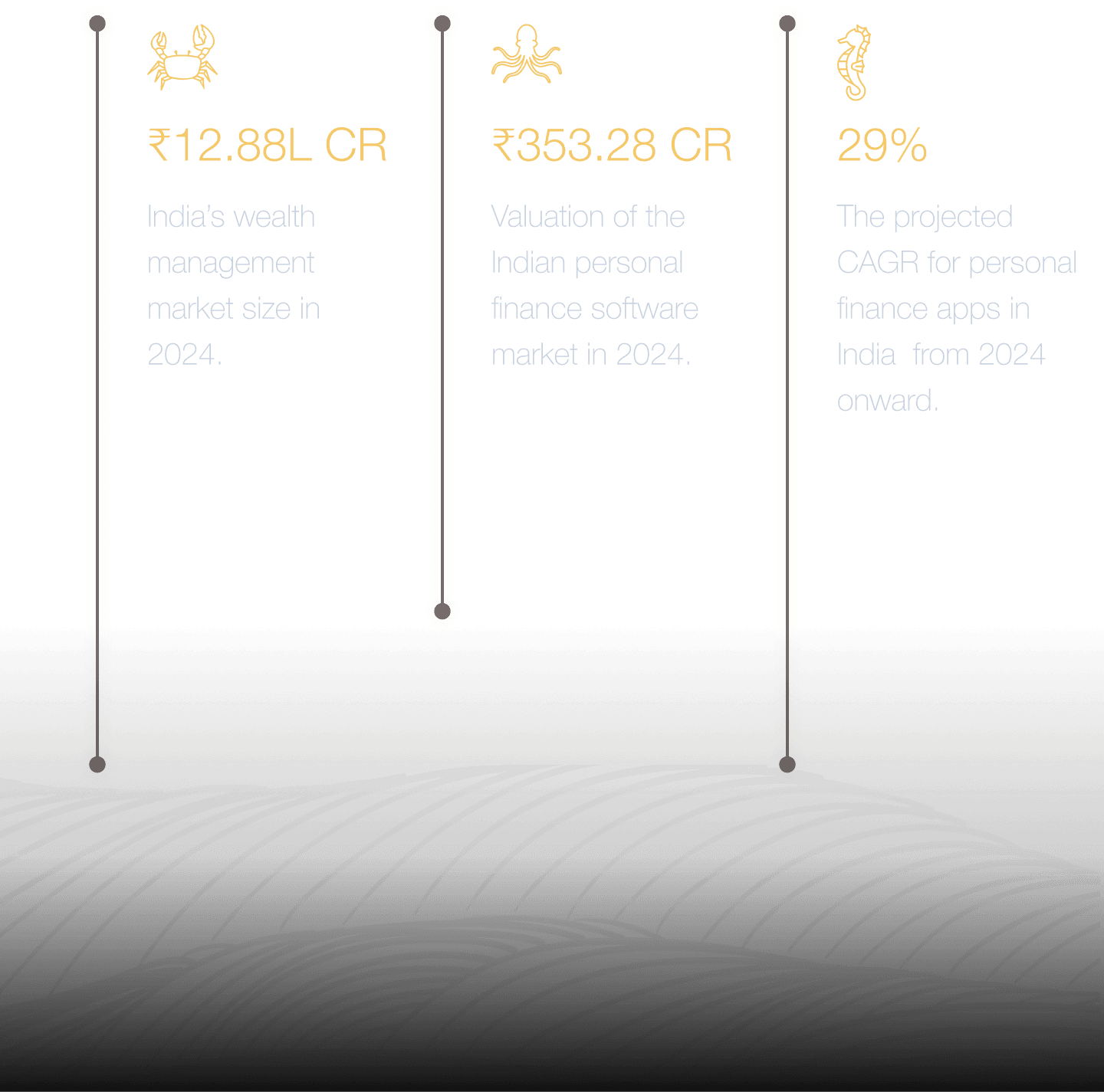
We first analysed the landscape to understand the scale of the problem.
What Lies Beneath the Surface
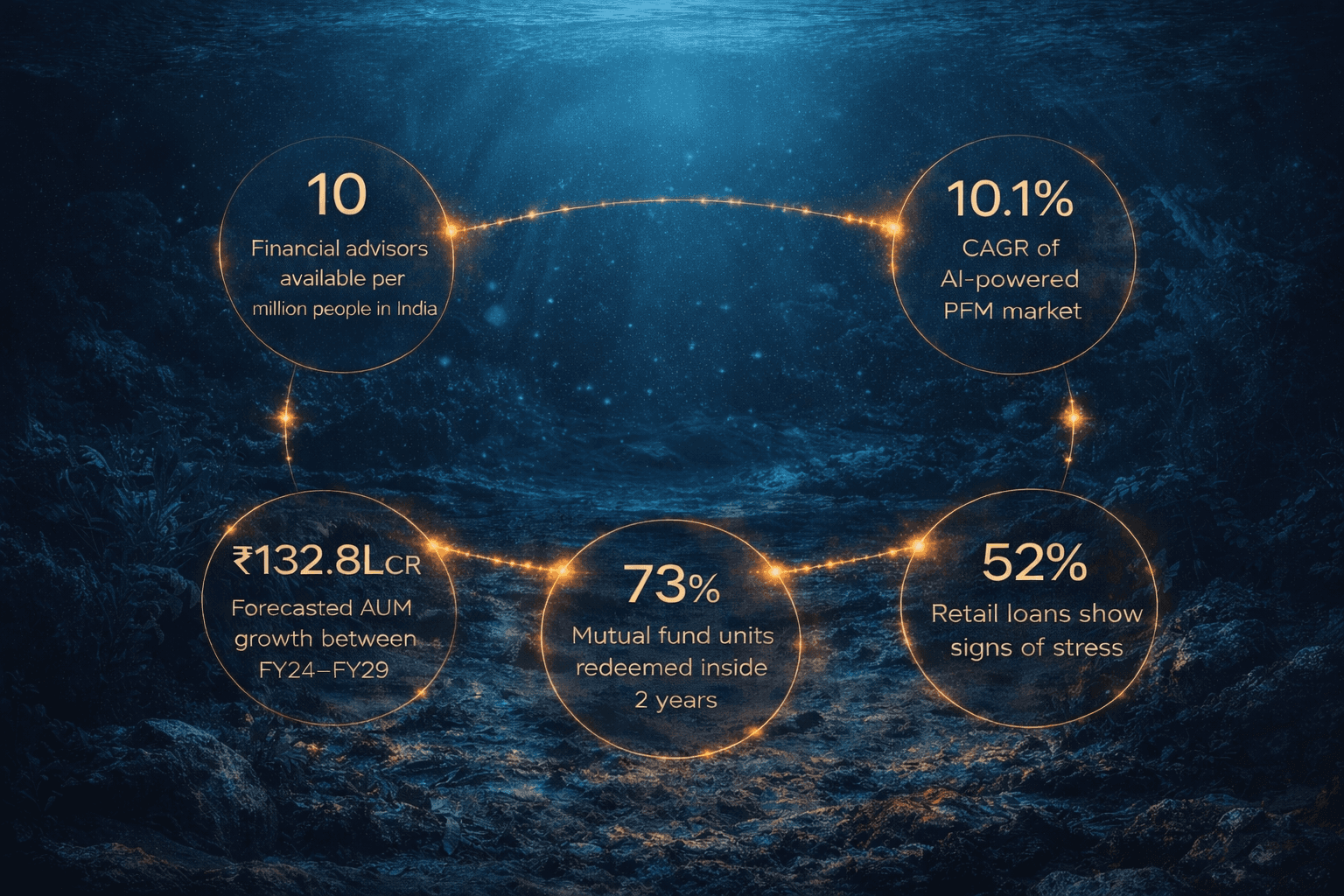
While money tools have scaled rapidly, financial clarity has not. Users are managing more financial products than ever yet feel less confident making decisions.
With only 10 financial advisors per million people, most Indians are forced to make complex financial decisions alone.
52% of retail loans showing stress indicates not reckless behaviour, but poorly timed, poorly understood borrowing.
Despite ₹132.8 L Cr in projected AUM growth, wealth is expanding faster than any single platform’s ability to consolidate it, leaving users without unified visibility or decision-level guidance.
The fact that 73% of mutual fund units are redeemed within two years shows short-term, anxiety-driven decisions — not long-term planning.
Meanwhile, the AI-powered PFM market growing at 10.1% CAGR proves demand exists — but current tools are not translating intelligence into trust.
As wealth grows more complex, the burden of clarity still sits entirely with the user.
As wealth grows more complex, the burden of clarity still sits entirely with the user.
Ships That Never Reached Shore
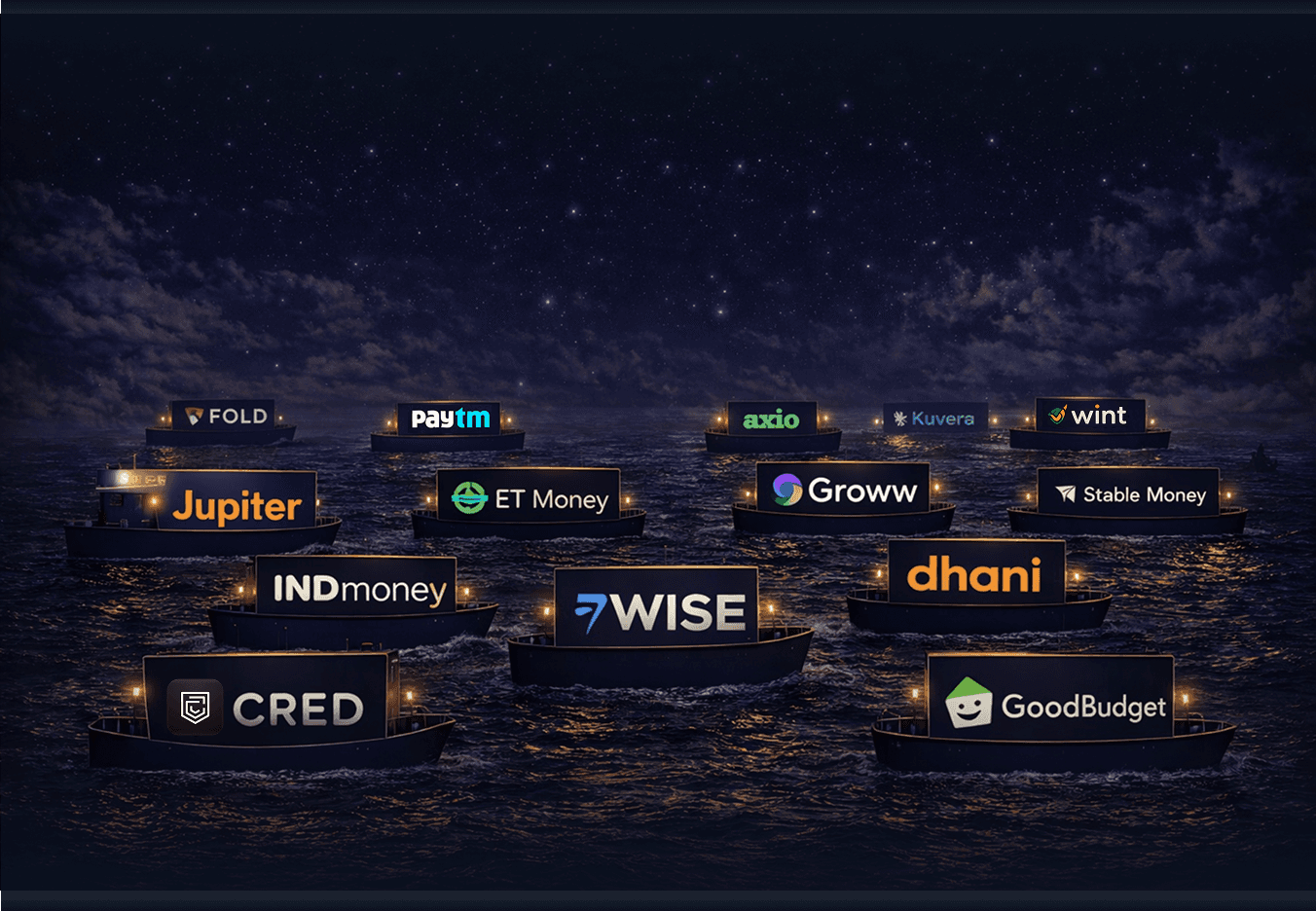
Many financial platforms entered the ecosystem each designed to perform a specific function well. Some focused on payments. Others on investments, credit, or budgeting. But these solutions were built as separate ships, each optimized for a single route. As users’ financial lives grew more interconnected, the experience remained fragmented requiring constant switching, mental effort, and trust across platforms.
The limitation wasn’t intent or capability. It was the absence of a unified navigation system one that could bring these journeys together into a single, coherent experience.
Many ships sailed, But none charted the full course.
Many ships sailed, But none charted the full course.
Charting the Course: Choosing the Right Problems to Solve
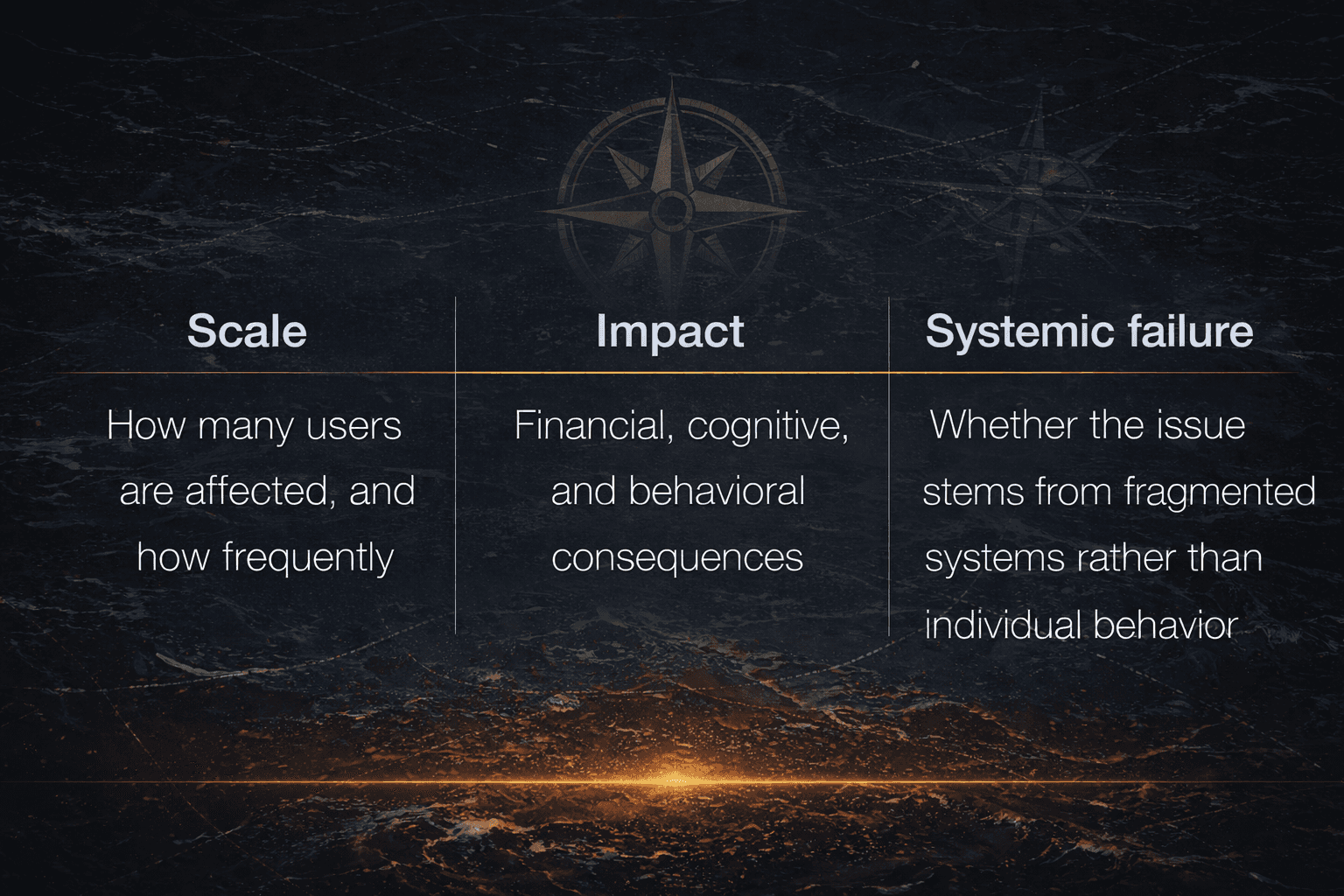
The market signals were loud, but not all of them were actionable. Through market research, industry analysis, and secondary data, multiple financial challenges surfaced ranging from rapid AUM growth and rising digital adoption to advisor scarcity, loan stress, and premature investment exits. These signals were evaluated across three lenses:
This filtering revealed a clear pattern, the most damaging problems were not caused by lack of access to financial products, but by lack of clarity, guidance, and continuity across them. From this analysis, five core problem areas emerged. Among them, three consistently demonstrated the highest user stress, business cost, and opportunity for structural improvement. These became the selected business cases.
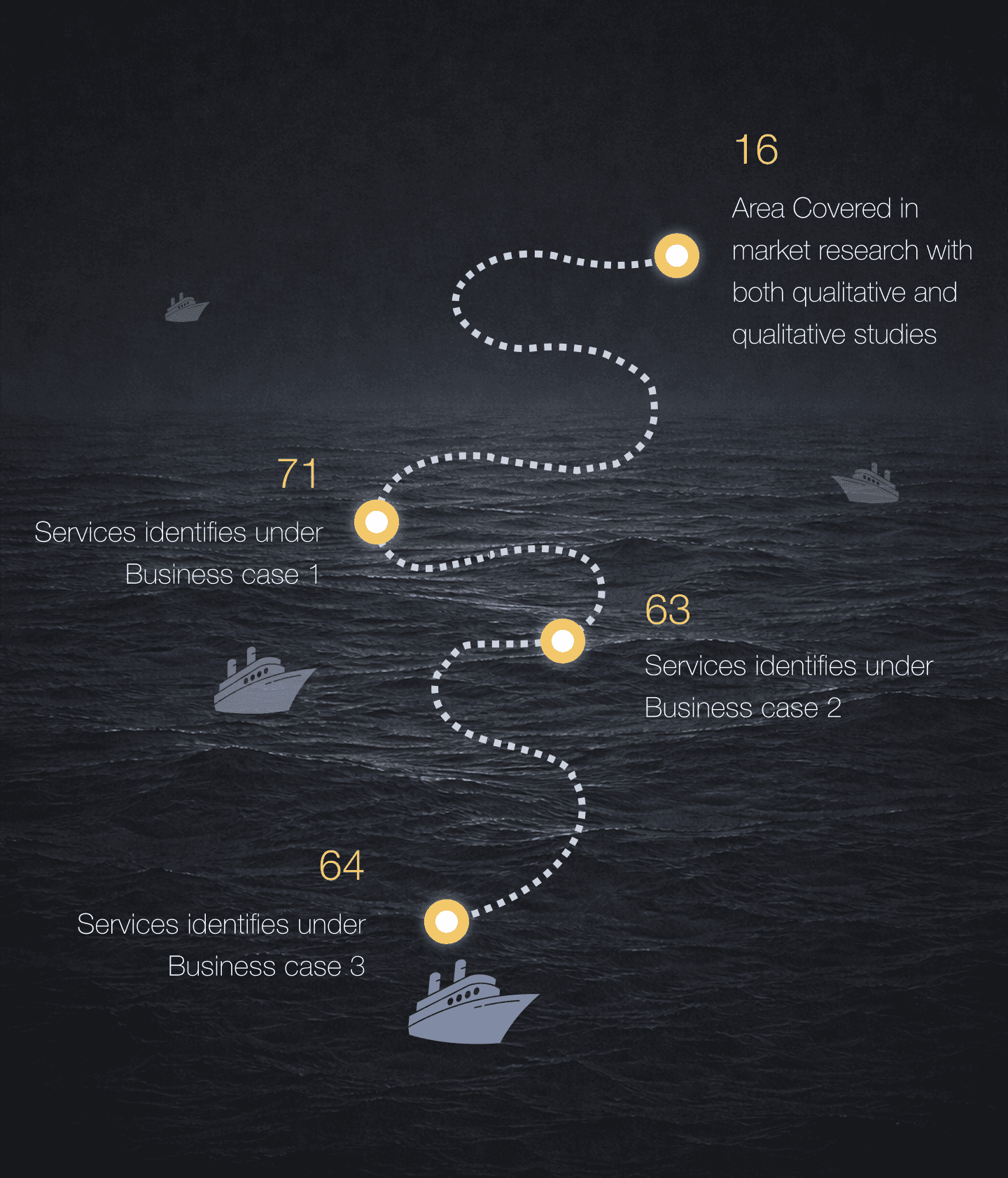
Business case 1
Fragmented Financial Management Across Multiple Apps
Fragmented Financial Management Across Multiple Apps
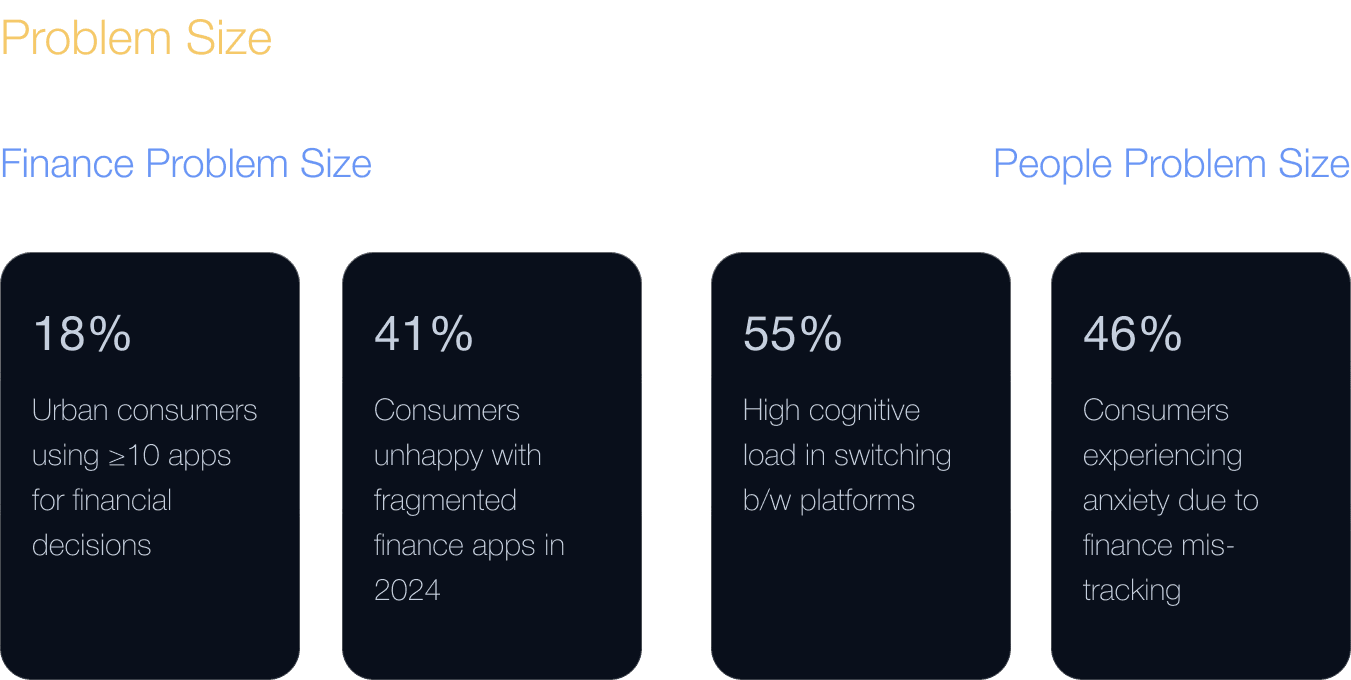
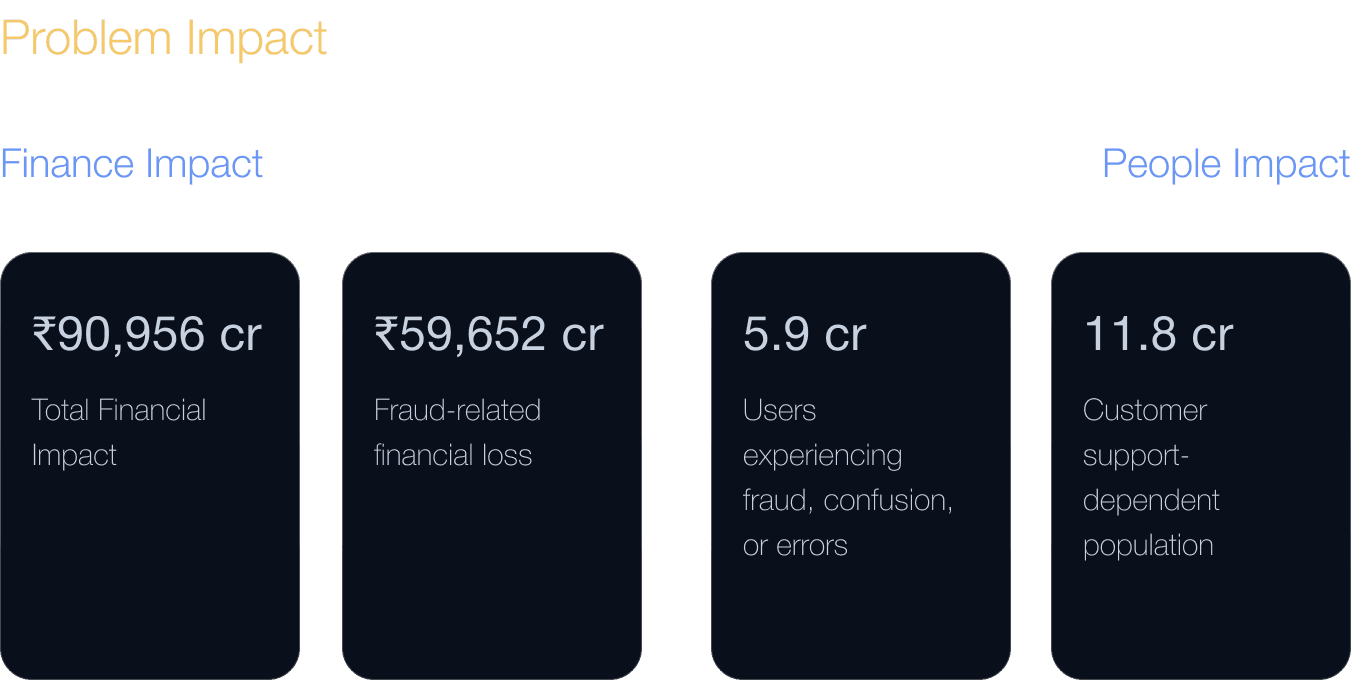
Urban consumers in India face significant challenges in managing their finances due to the reliance on multiple financial applications, each with distinct interfaces and login requirements. This fragmented approach creates complexity, making it difficult for users to track their financial activities effectively, often resulting in missed payments and overlooked obligations. Consequently, the cumbersome nature of navigating these disparate apps leads to disengagement from personal finance management tools, hindering consistent financial oversight and planning.
Stories revealed the pain but the patterns ran deeper and the business case revealed every hidden wave.
Business case 2
Inadequate Support for Debt Management
Inadequate Support for Debt Management
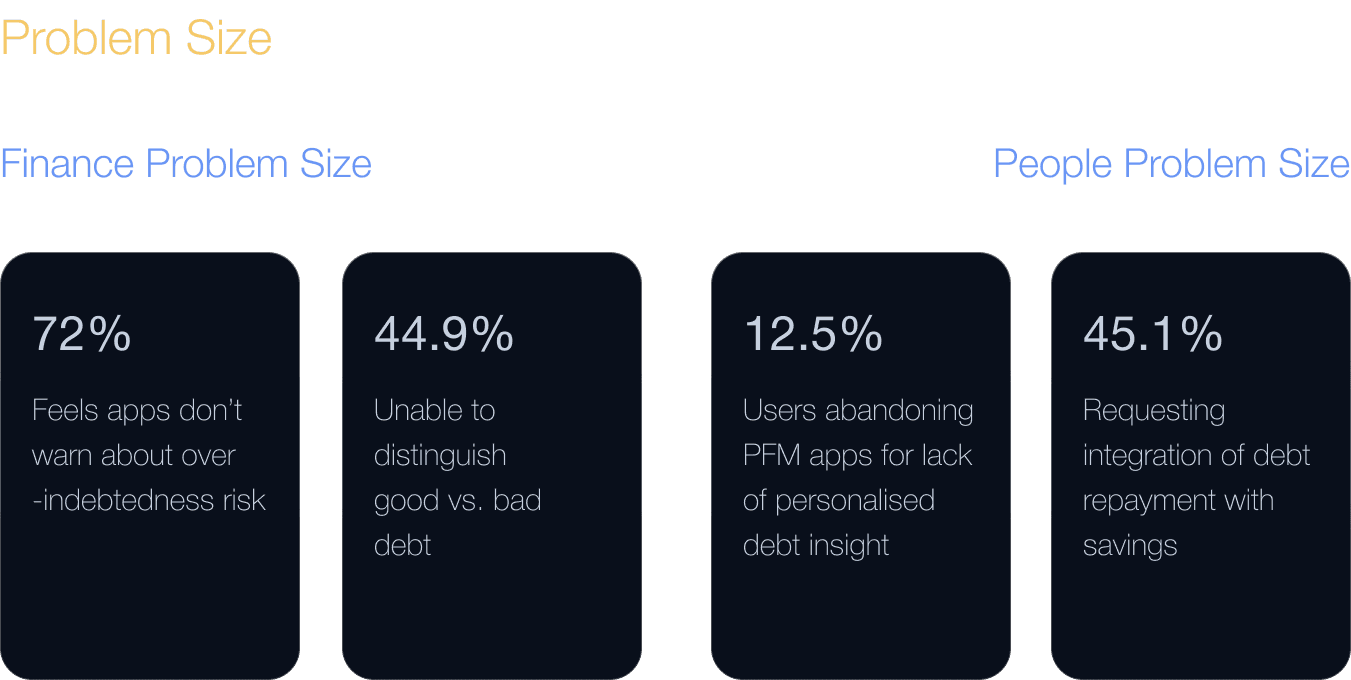
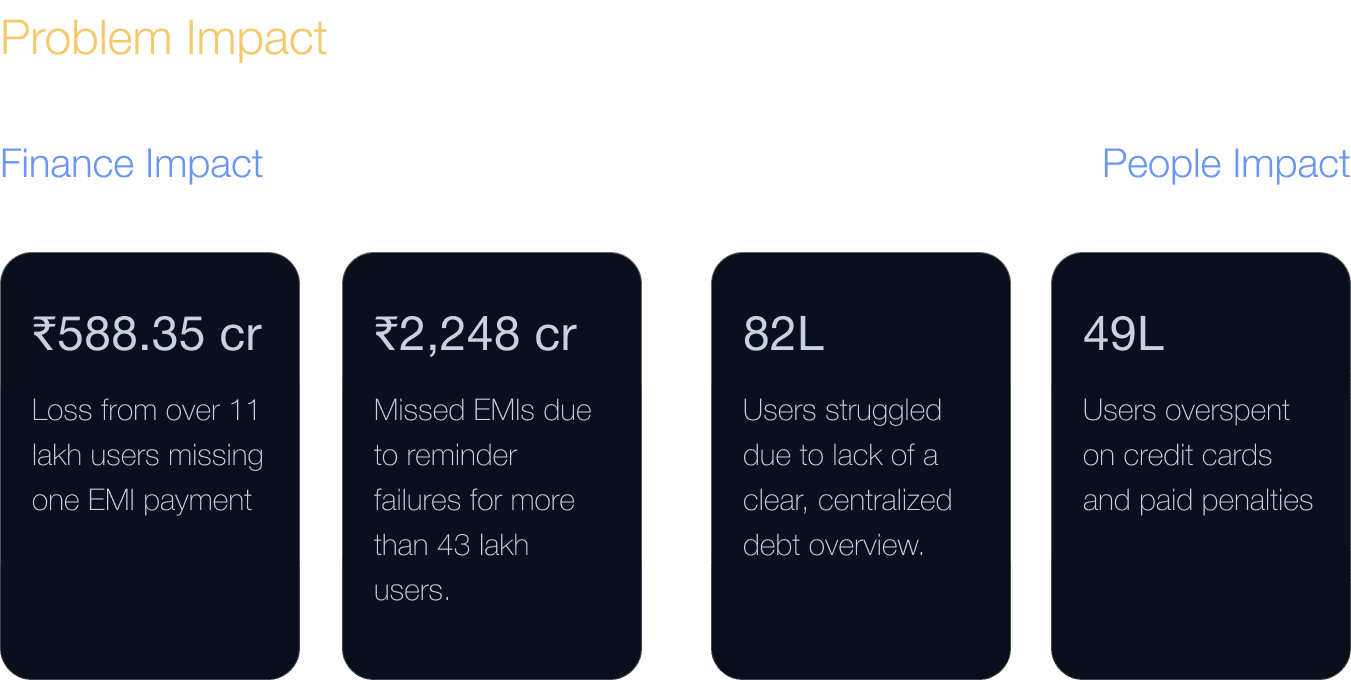
Within India's Personal Finance Management (PFM) industry, urban consumers, particularly those from Generation Z, face significant challenges in managing their debts effectively due to insufficient support from existing platforms. These PFM platforms lack adequate tools and guidance specifically tailored to address the debt management needs of this demographic. As a result, these consumers encounter increased instances of payment defaults, heightened financial anxiety, and extended periods required to repay their debts.
Every broken moment wasn’t a failure it was a signal, pointing us toward what needed to change.
Business case 3
Limited Adoption of Budgeting Tools
Limited Adoption of Budgeting Tools
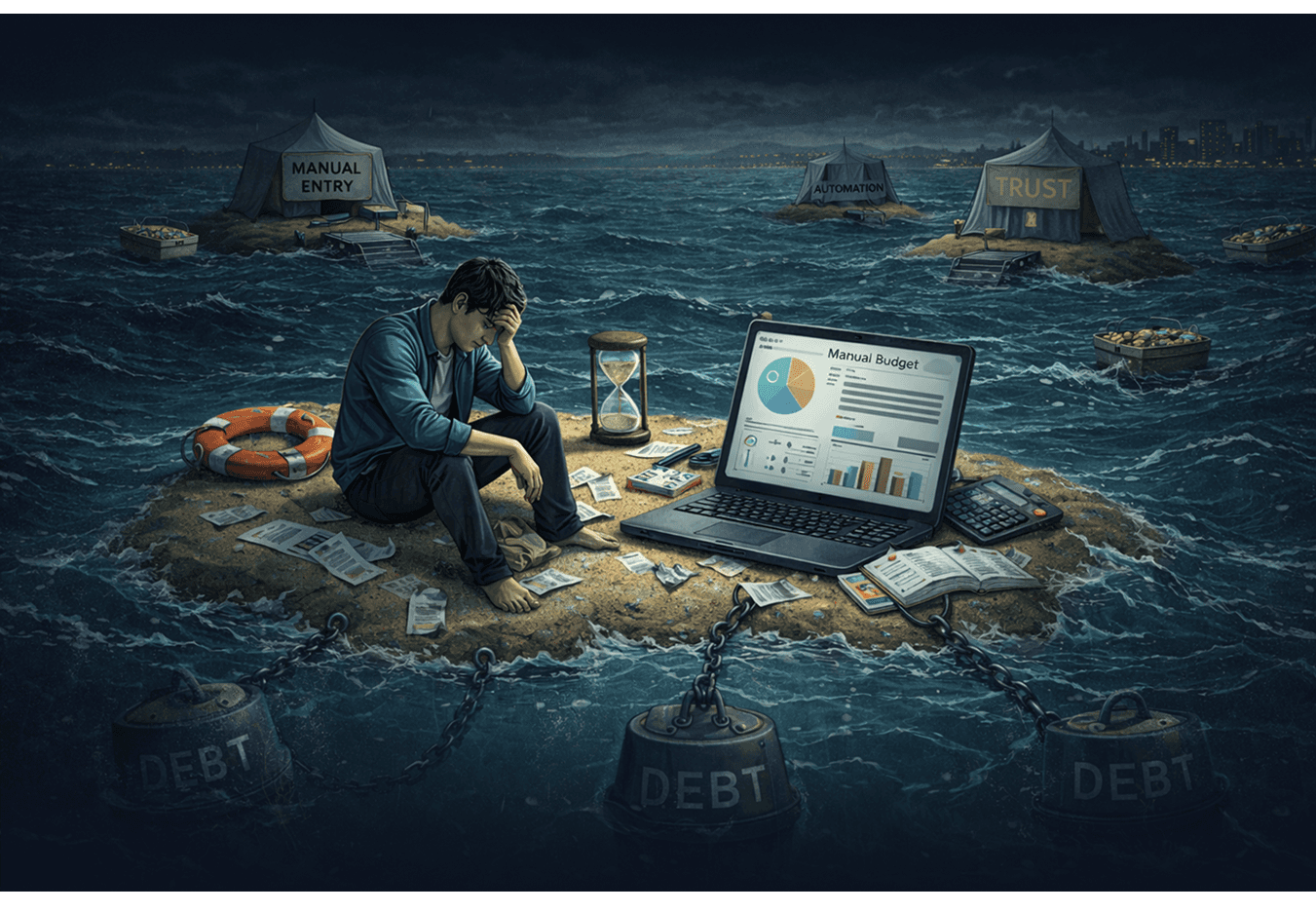
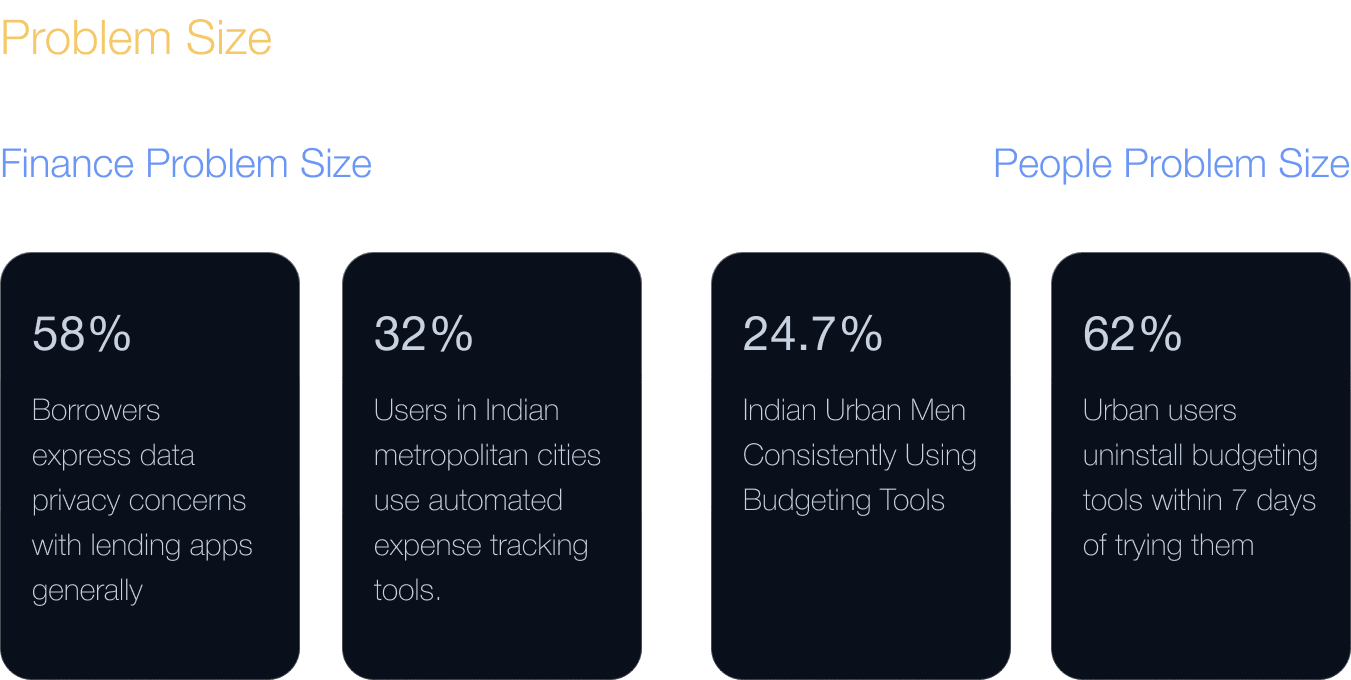
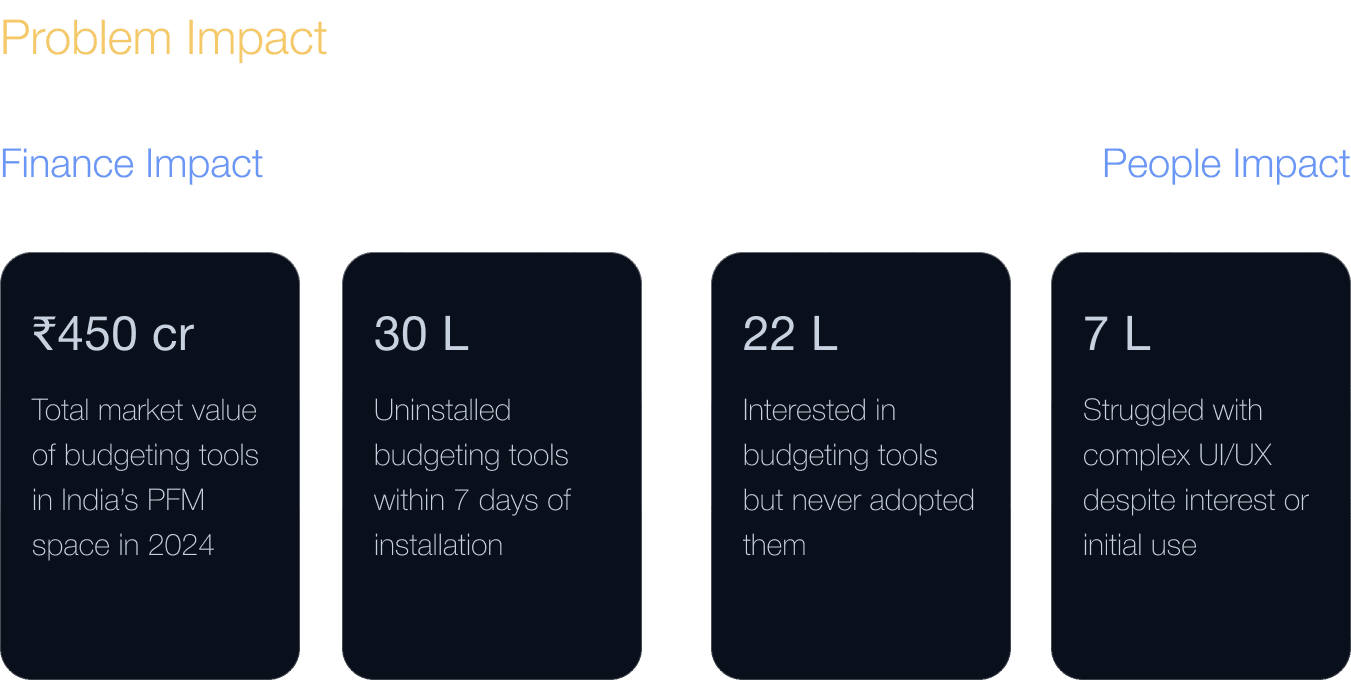
Urban consumers in India demonstrate considerable interest in budgeting tools offered by Personal Finance Management (PFM) apps, yet their consistent usage remains limited. The challenges stem from the burdensome requirement of manual data entry, the absence of effective automation, and a lack of trust in auto-categorization features. These obstacles impede the seamless adoption and sustained engagement necessary for efficient financial tracking and management within the PFM industry.
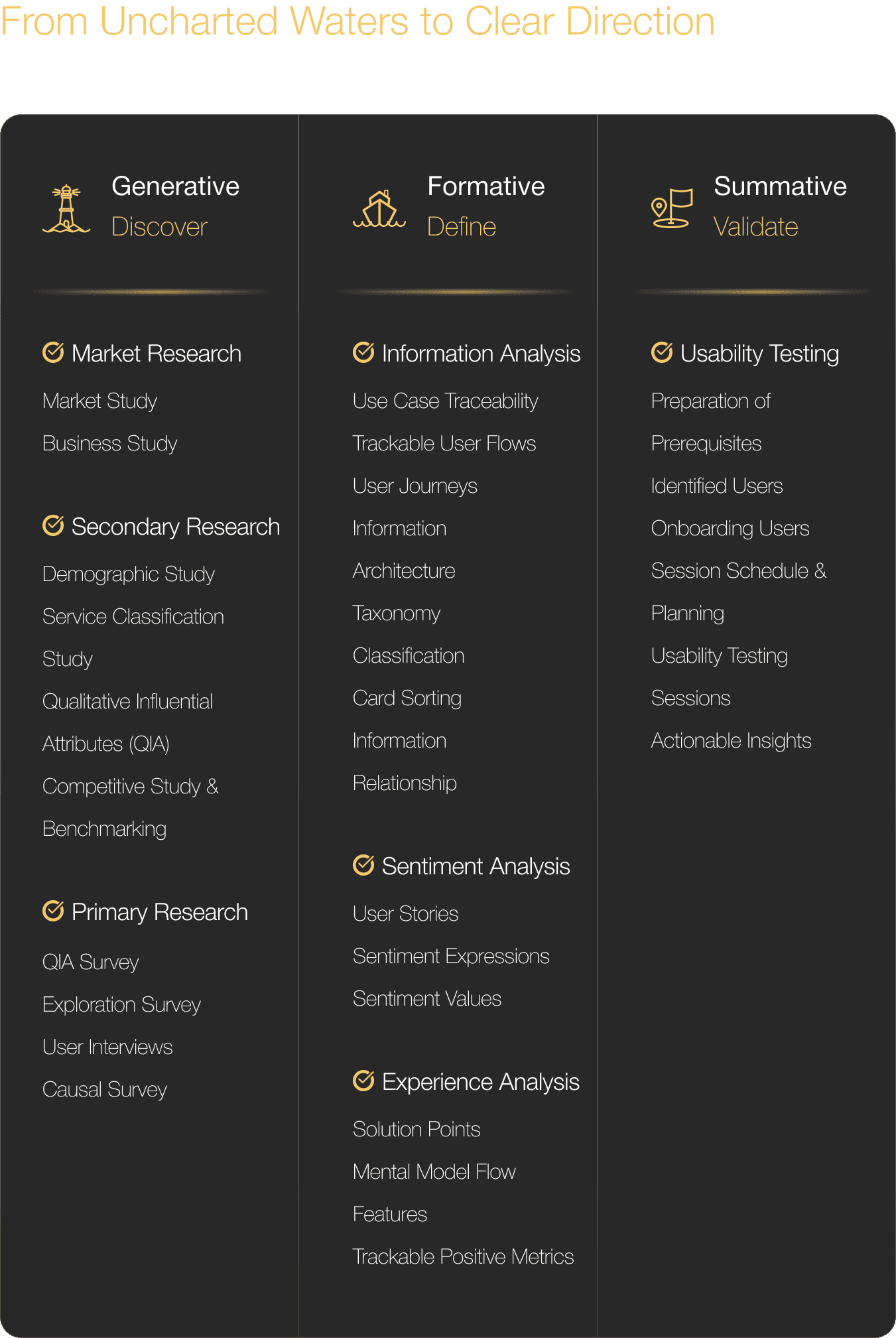
Market Research
A structured analysis of industry dynamics, business models, and scale.
Secondary Research
We examined the current financial ecosystem to understand how products, users, and services are organised today. The goal was not to validate assumptions, but to identify patterns, overlaps, and gaps across the industry.
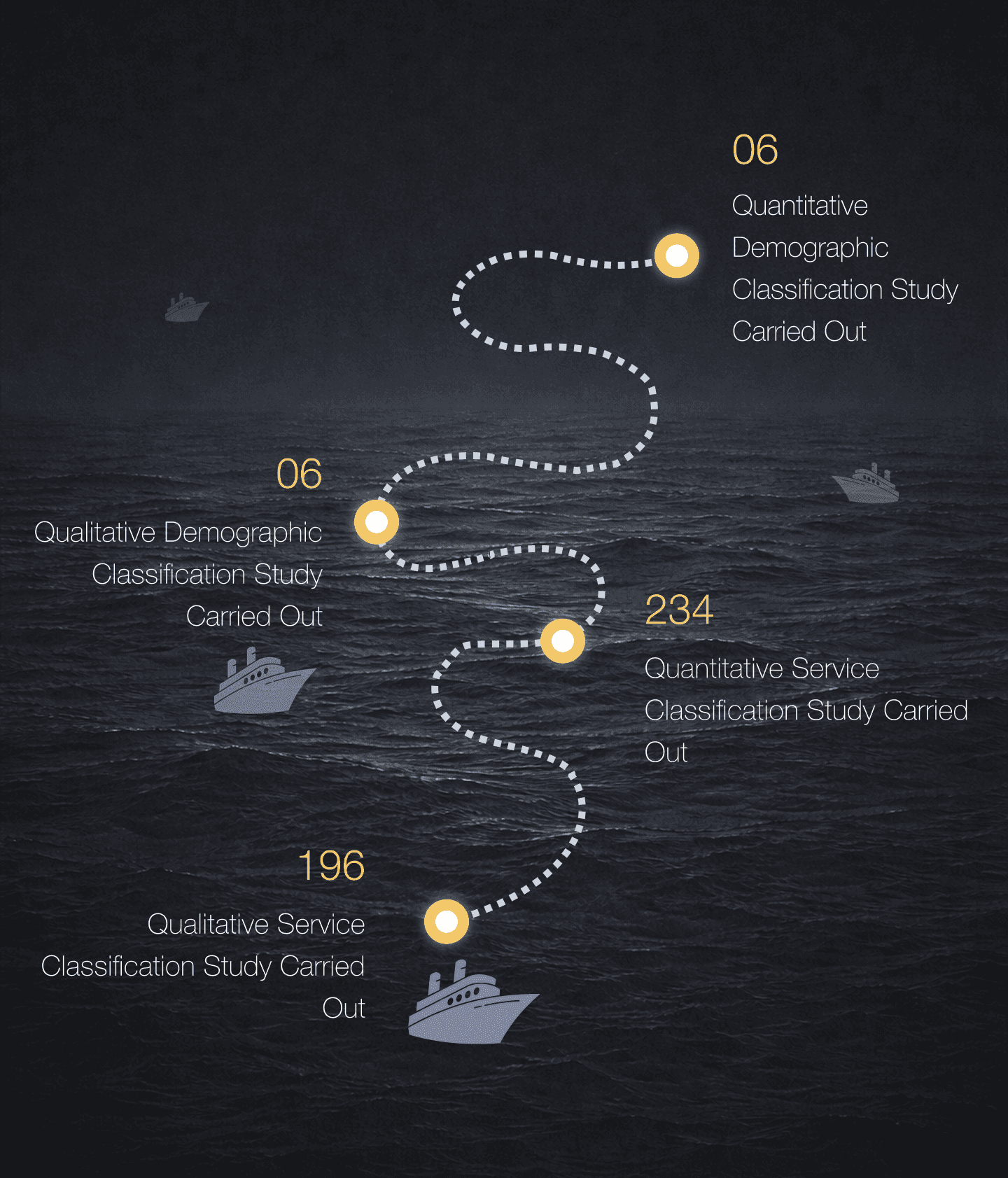
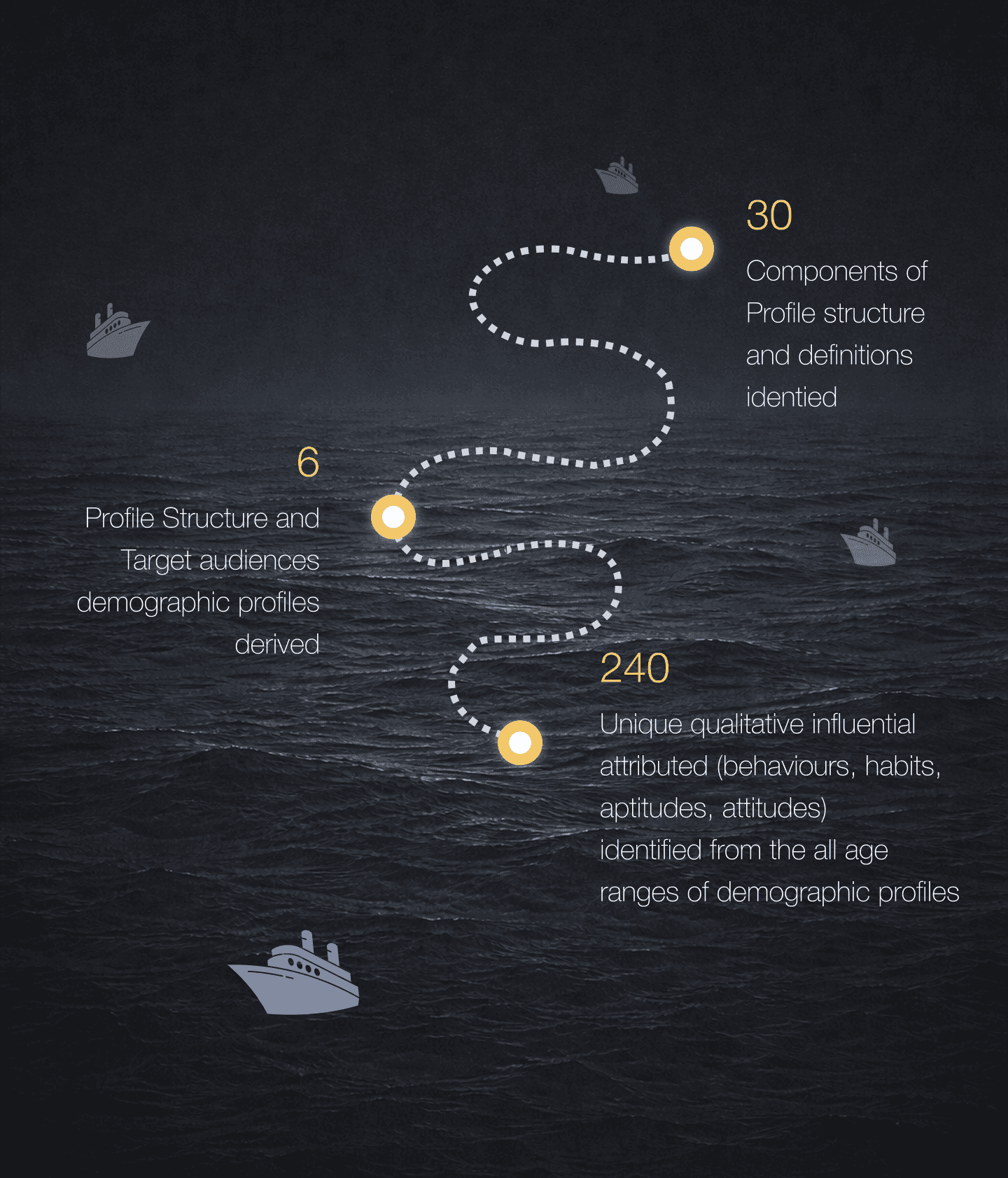
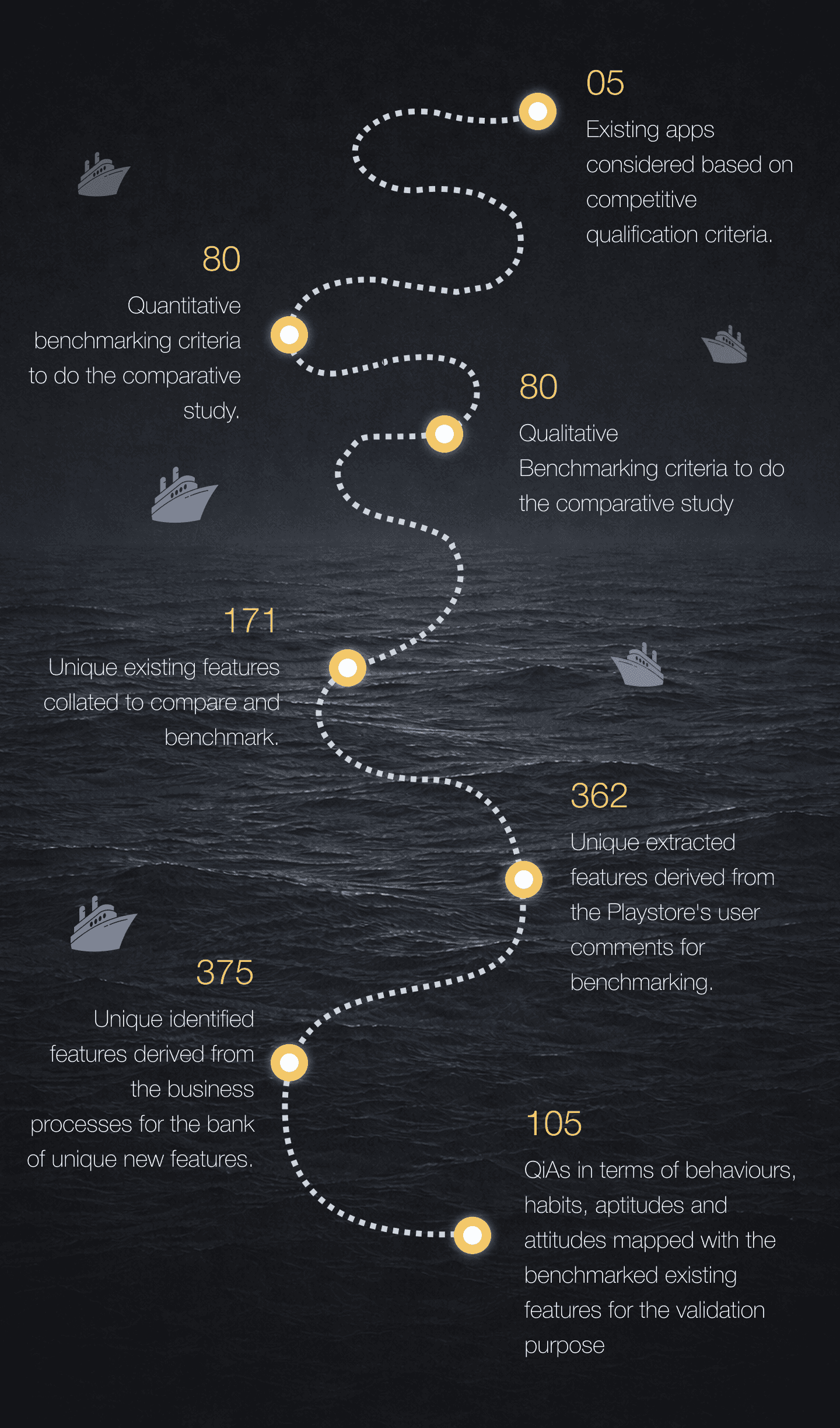
We conducted industry and business classification studies, analysed demographic and profile structures, and benchmarked existing platforms against qualitative and quantitative criteria. This helped us map service clusters, feature distributions, and dominant design patterns.
These findings created a factual baseline revealing how the market operates, where redundancy exists, and where clarity begins to break down setting the stage for deeper user-focused research.
Industry & Business Classification Studies
Profile Structure & Demographic Profiles
Competitive Study & Benchmarking
Primary Research
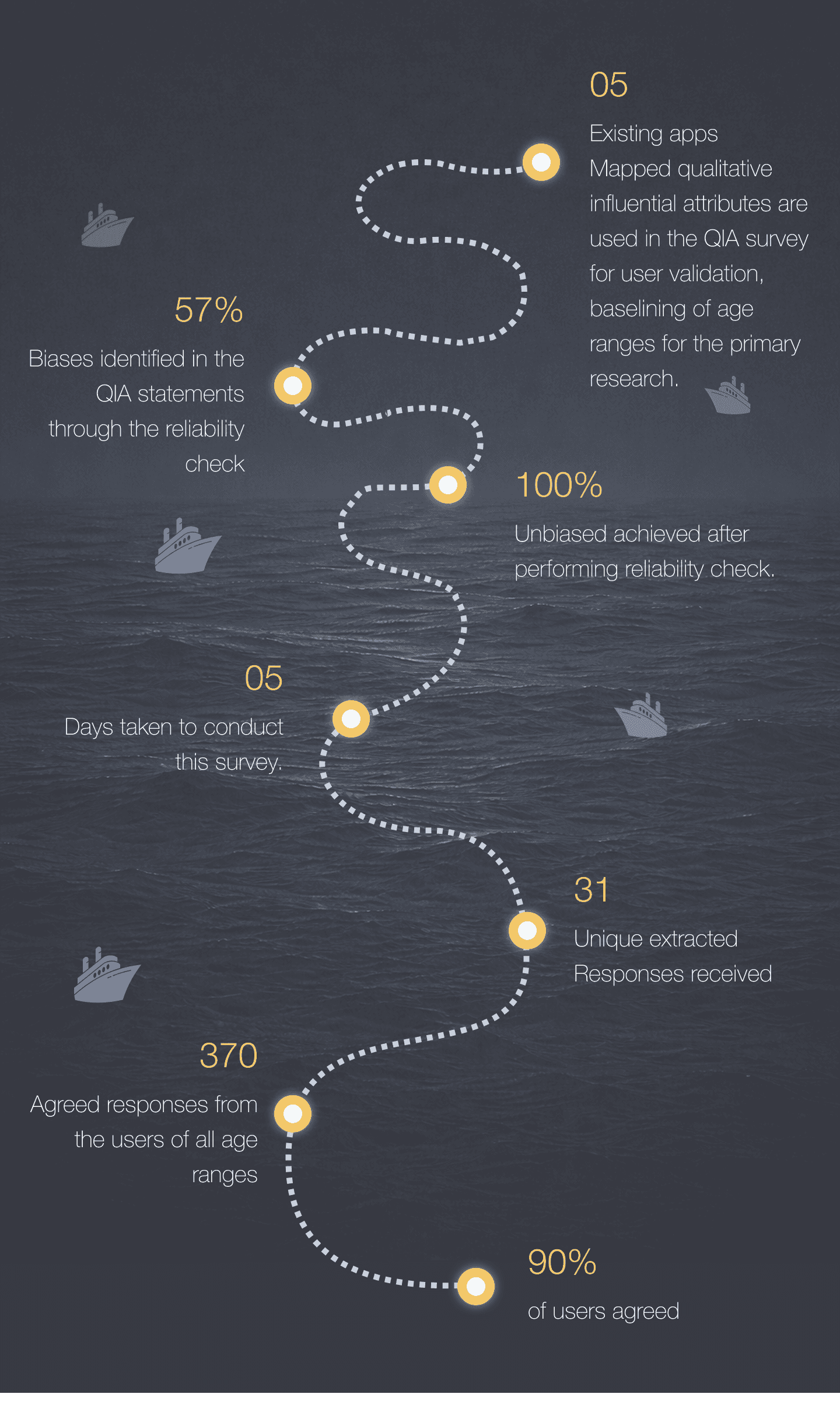
By speaking directly with users, we validated secondary insights and uncovered the emotional drivers behind financial behavior. We identified the real moments of friction that shape trust, decision-making, and abandonment.
Beyond metrics, this phase revealed emotions, motivations, trust gaps, and breakdown points clearly defining the problems truly worth solving.
Sentimental Analysis
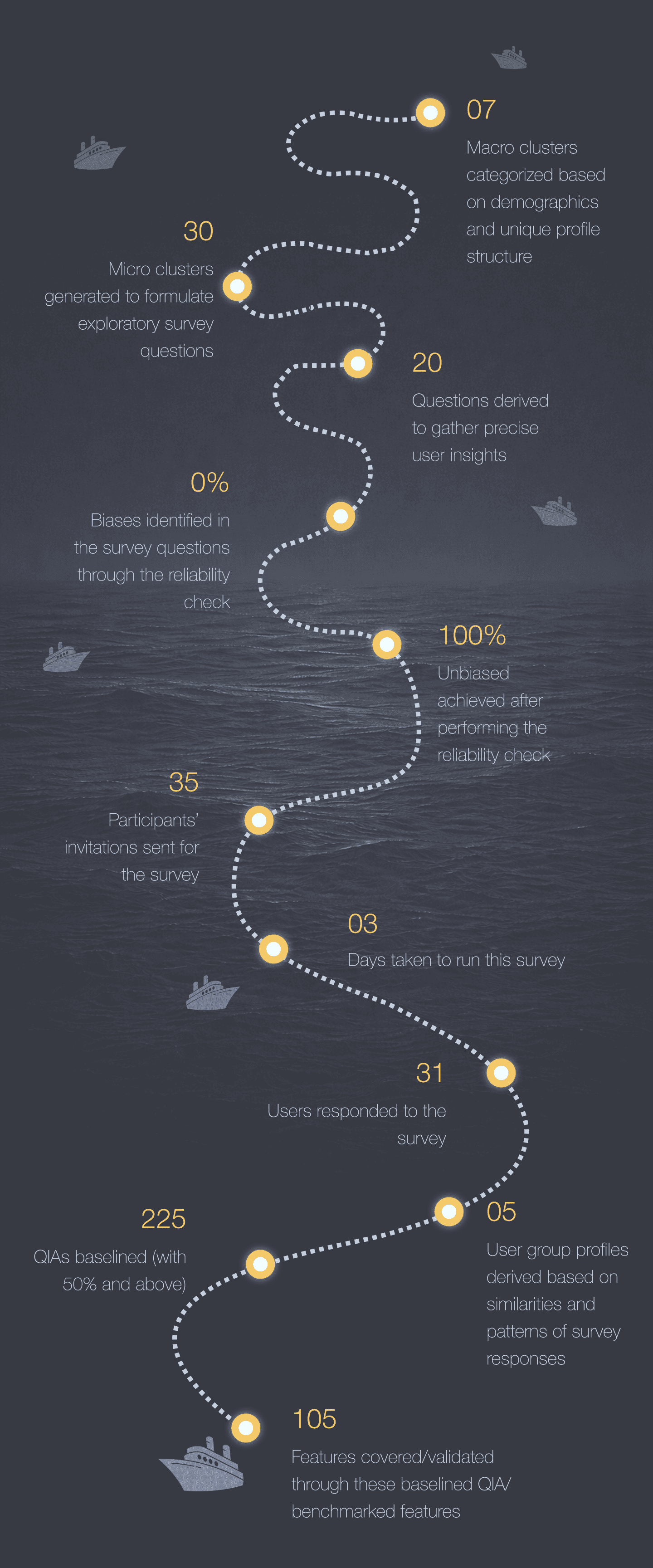
Exploratory Survey
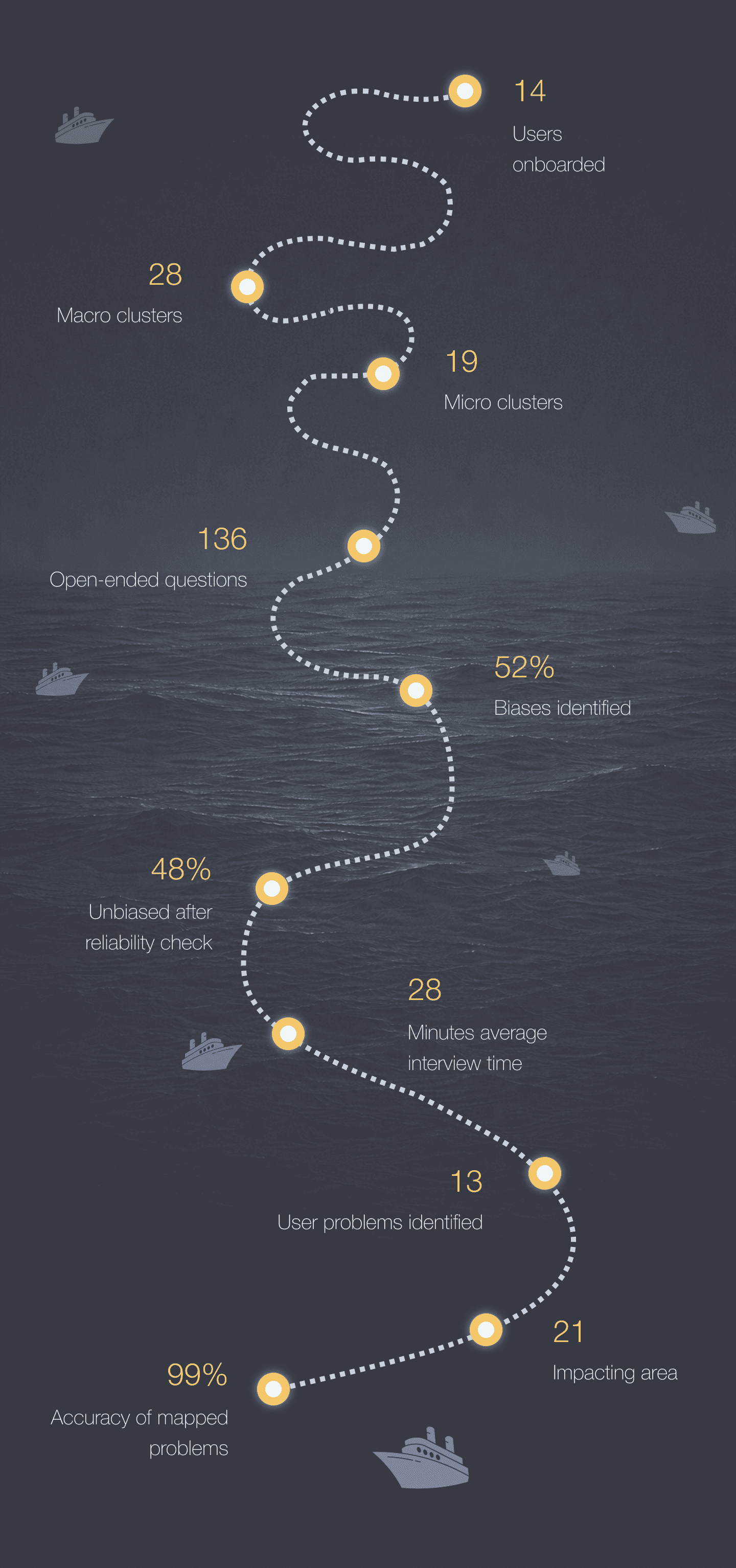
User Interview
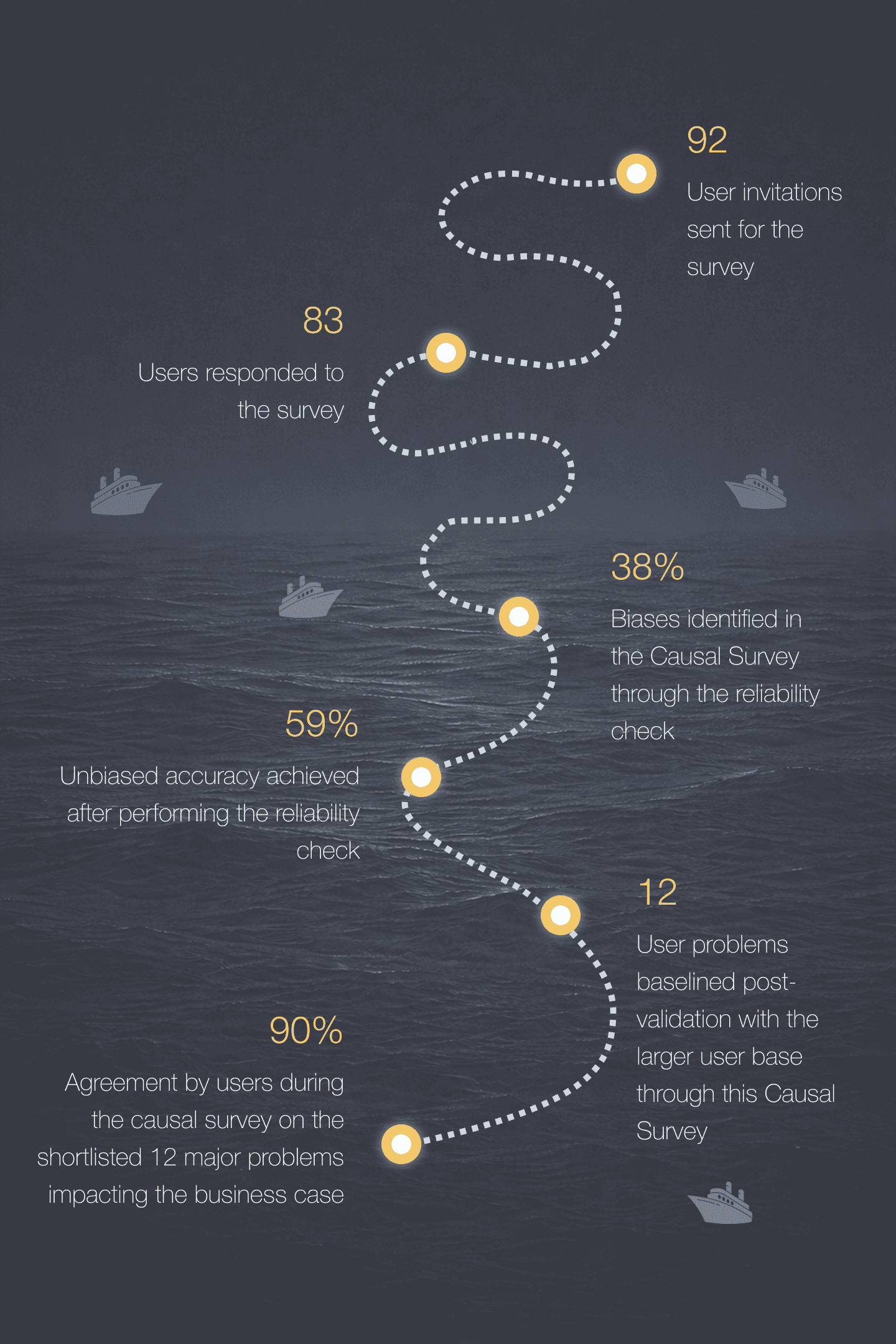
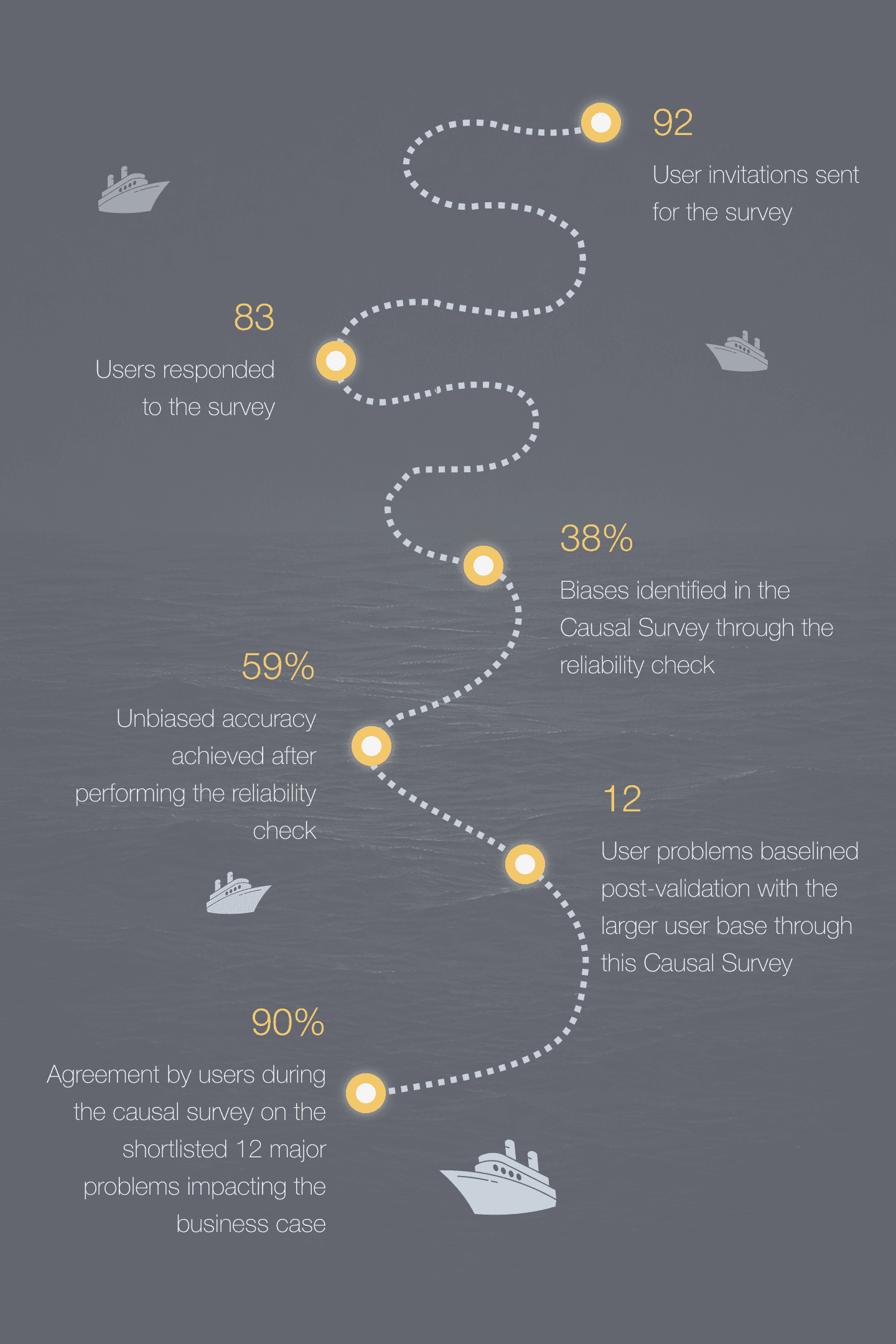
Casual Survey
User problems
What began as patterns in data became lived realities, Primary research replaced assumptions with truth and direction.
Analysis
Analysis transformed raw research into a navigable map. By synthesising sentiments, behaviours, and experiences, we connected what users said, felt, and did into clear patterns. This phase revealed where frustration peaks, where motivation drops, and how information breaks down across the journey.
Through structured frameworks and traceability, scattered insights became actionable clarity preparing the ground for solution design.
Sentimental Analysis
Experience Analysis
User Case Traceability & Experience Treading
Taxonomic Classification & Information Hierarchy
Analysis bridged research and design, converting raw data into decisions grounded in real user needs.
Persona
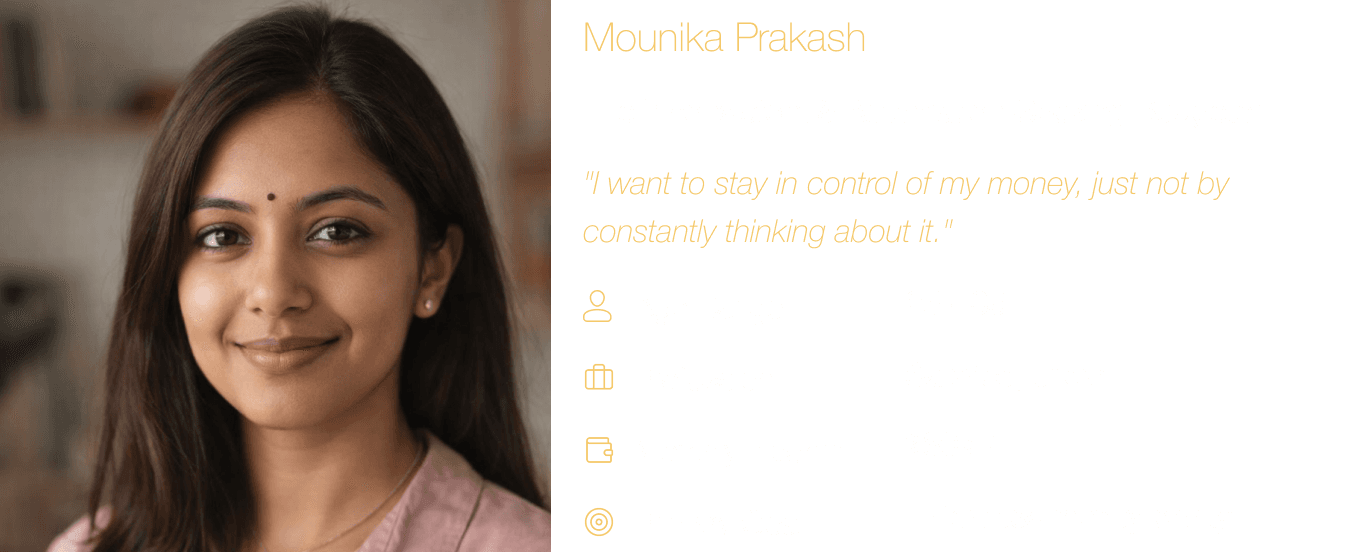
From interviews with 30 users, we identified three recurring behavioral patterns. To design with clarity, we synthesized these patterns into representative personas. Mounika represents one of the highest-friction segment.
User Story
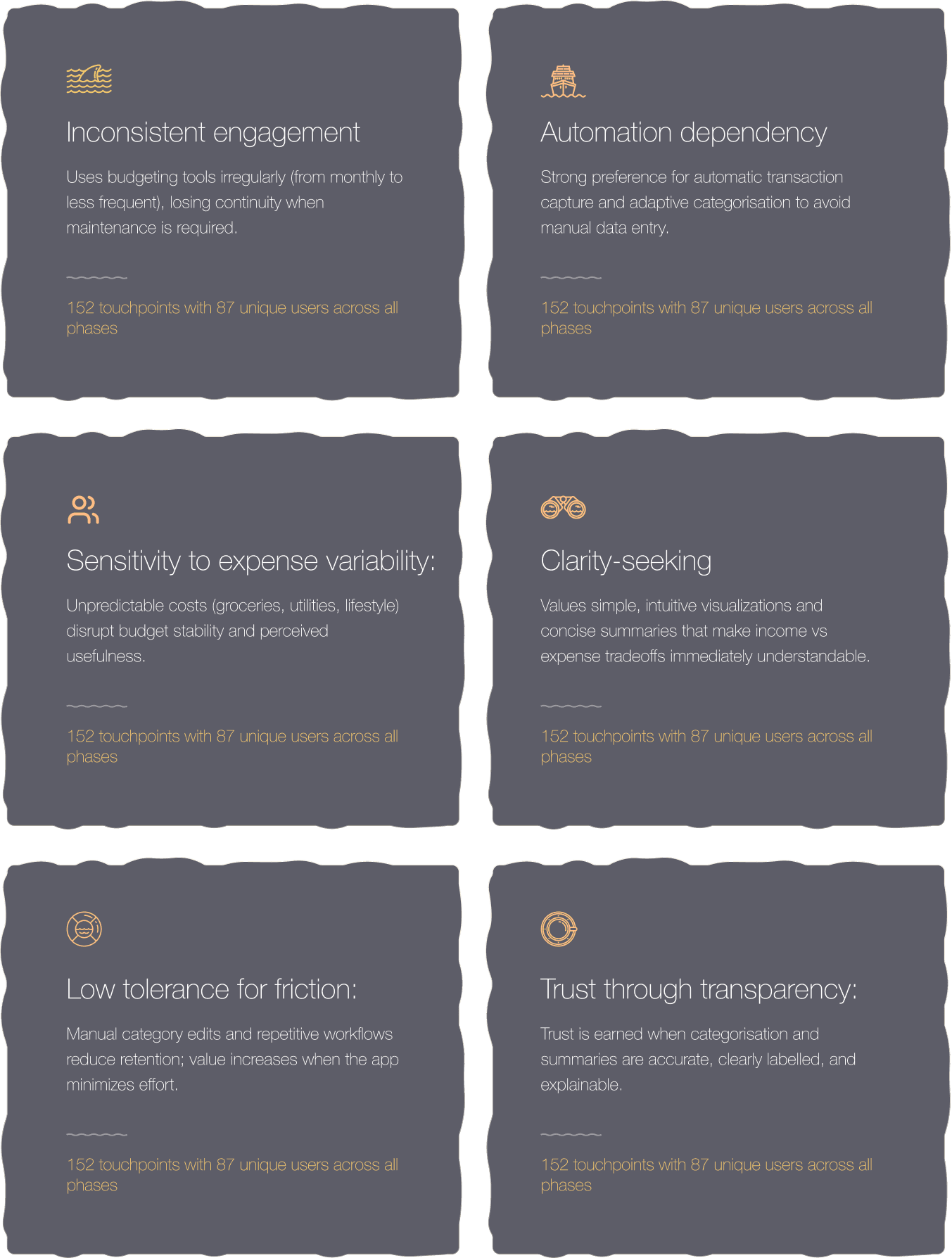
This persona represents urban professionals who use finance apps but frequently lapse in routine budgeting because of fluctuating monthly expenses and the friction of manual entry. They engage more when tools automate transaction capture and categorisation, present income-vs-expense insights clearly, and remove routine decision-making overhead turning budgeting from a chore into an effortless, trustable habit.
Characteristics
User Problems
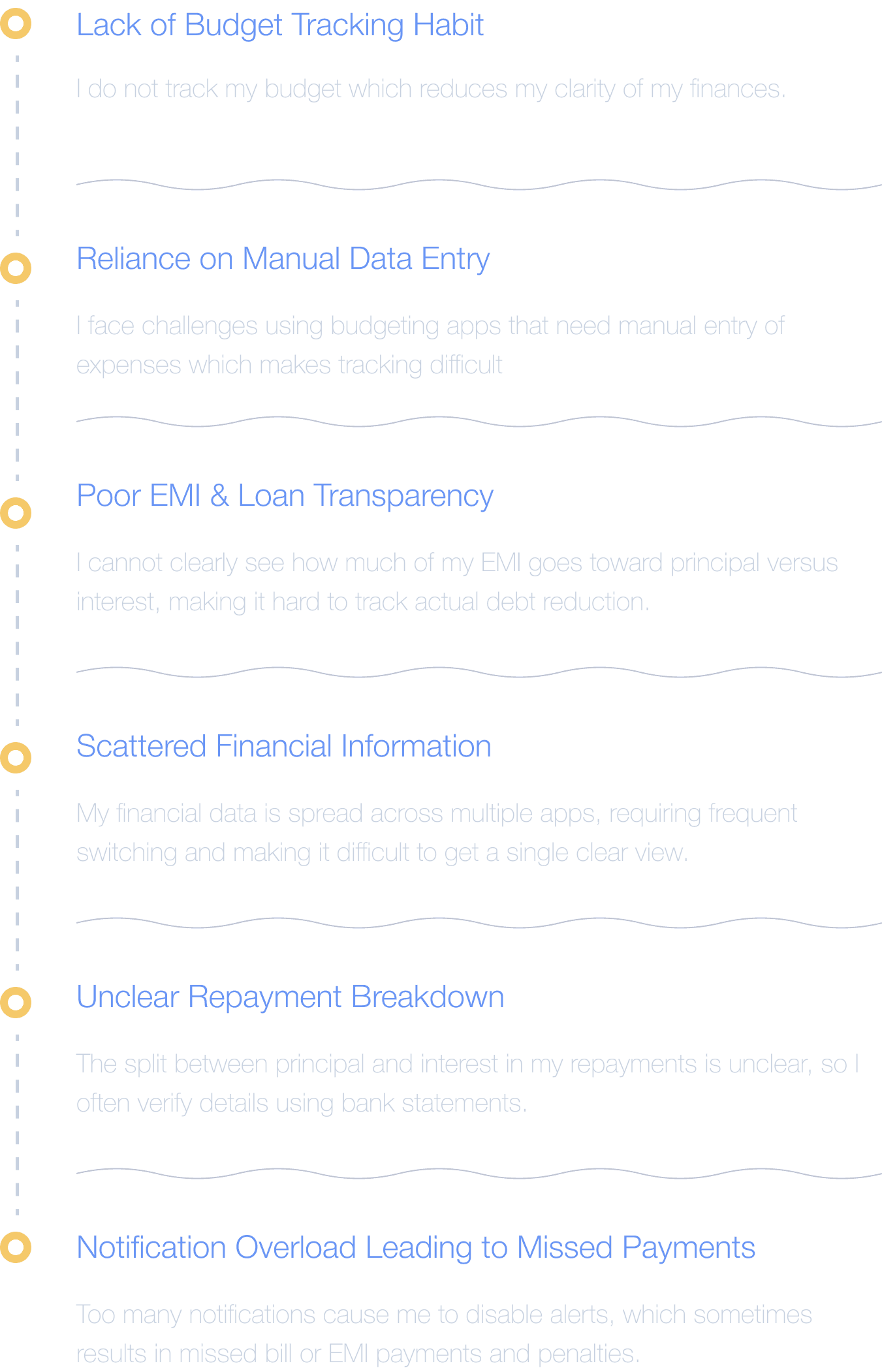
Lack of Budget Tracking Habit: I do not track my budget which reduces my clarity of my finances.
Reliance on Manual Data Entry: I face challenges using budgeting apps that need manual entry of expenses which makes tracking difficult
Forgetting to Budget: I forget to create or update my budget which affects my ability to track money.
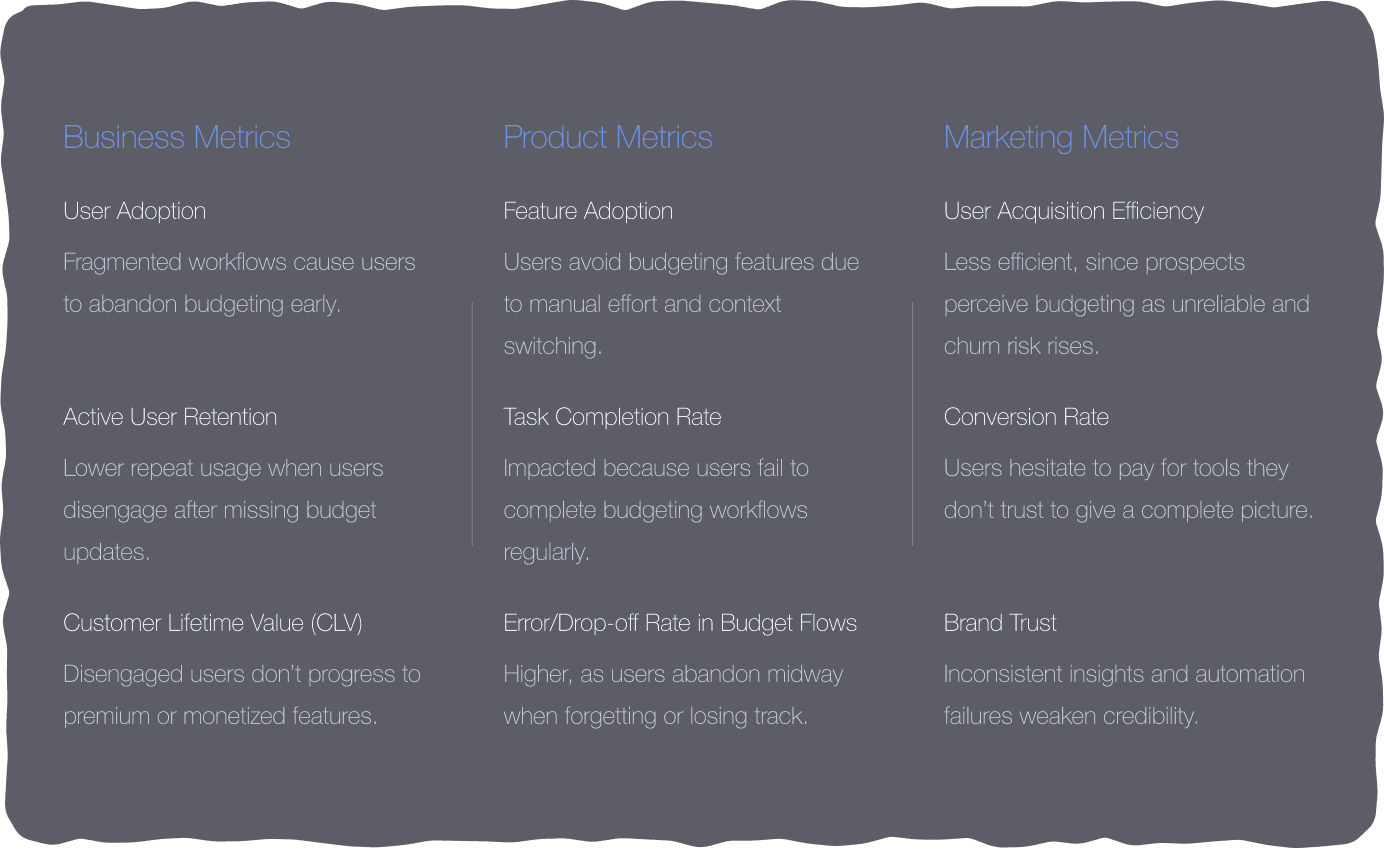
Impact Metrics
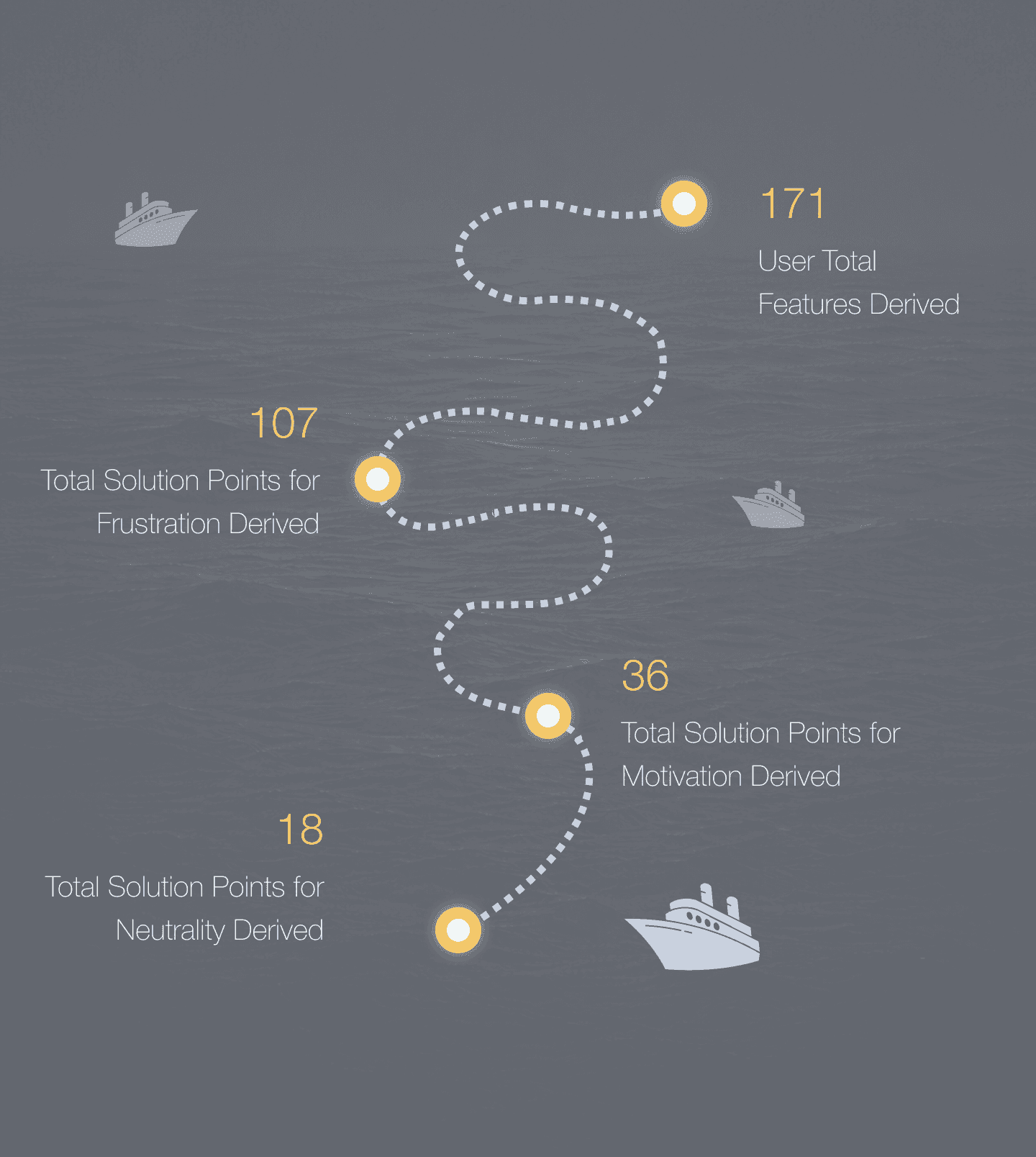
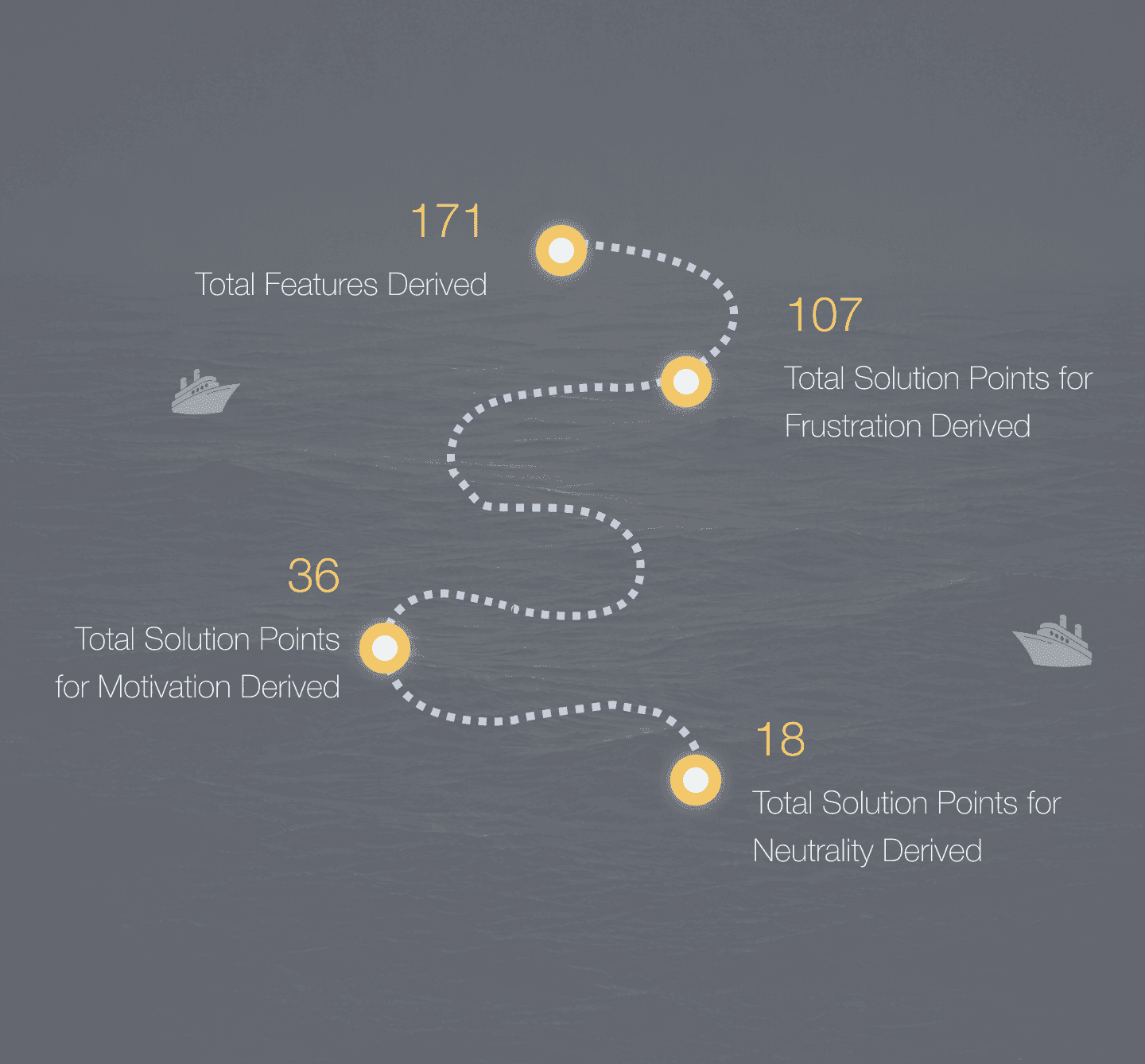
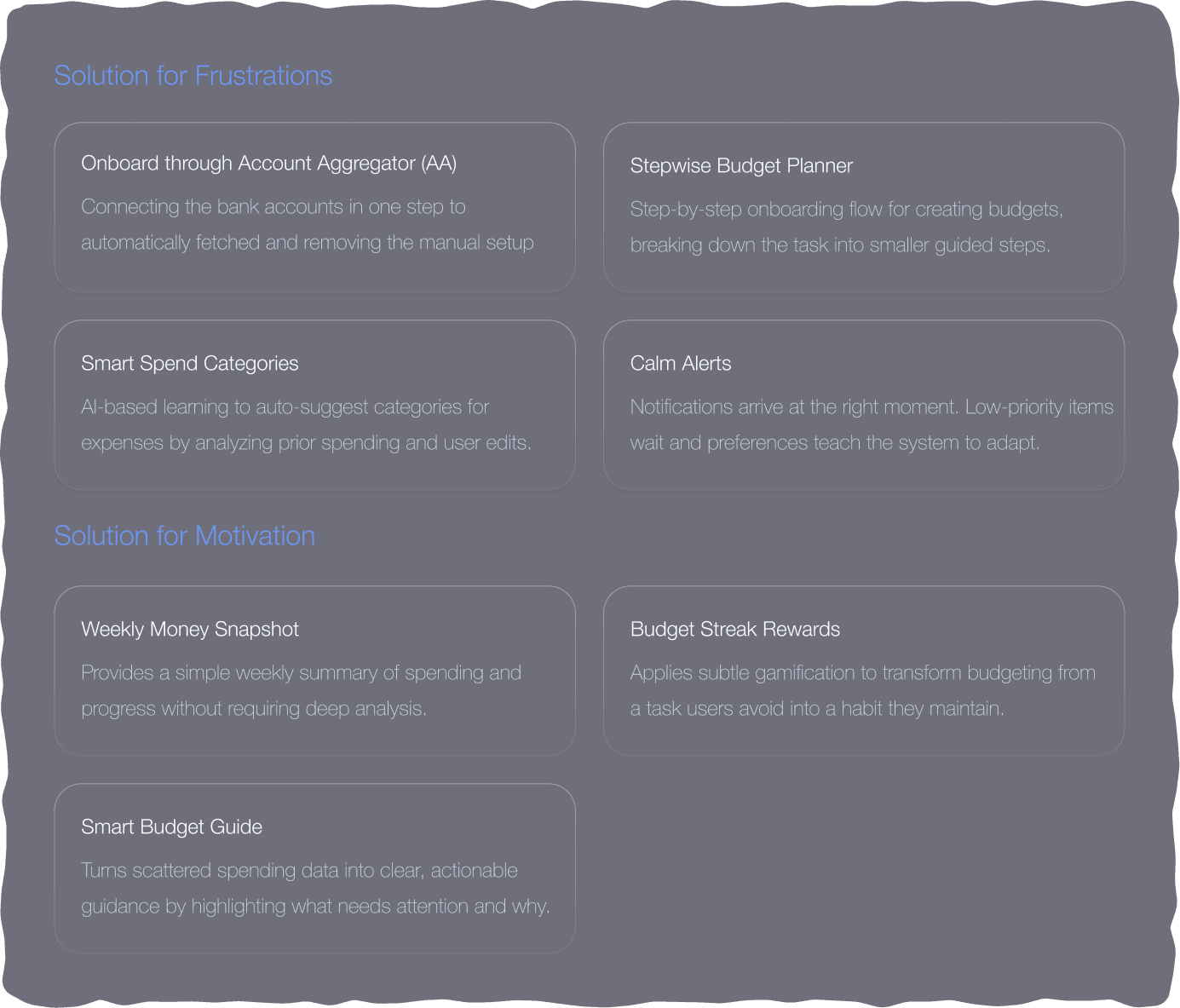
Solution Points
Menu Name: Budget
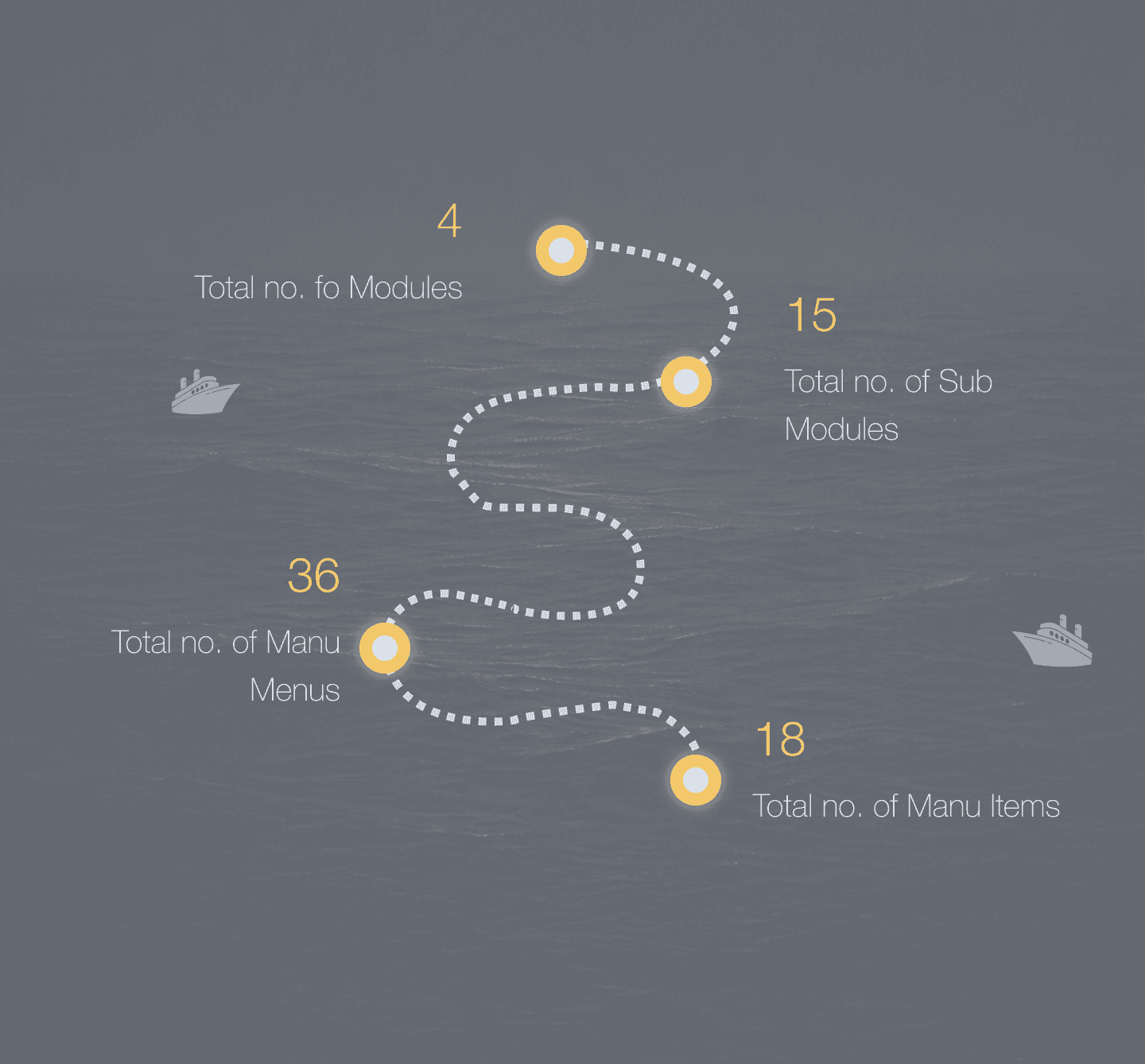
We conducted a closed card-sorting exercise with the same participants to validate the clarity and relevance of the defined menu items derived from earlier research.
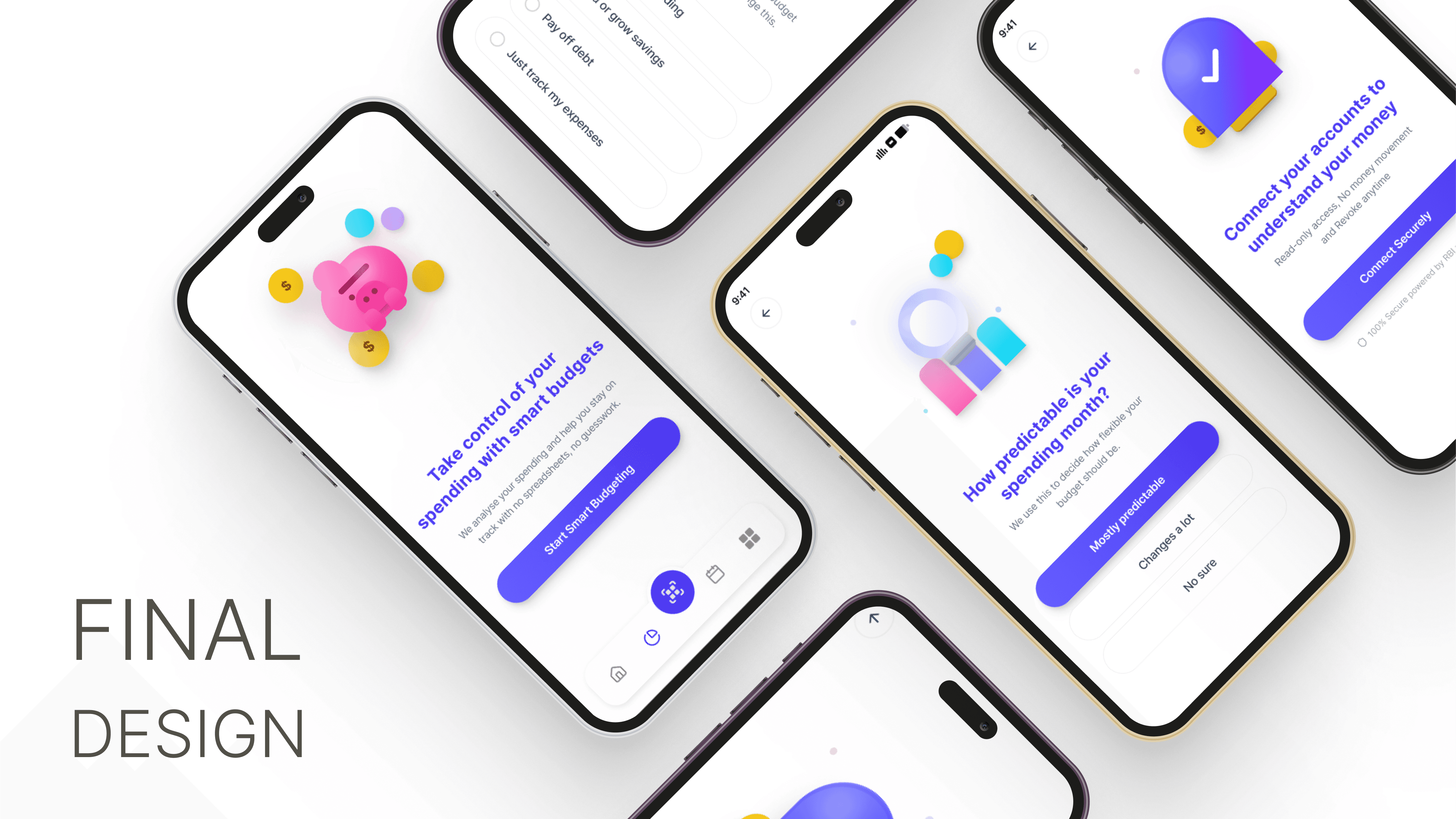
Users onboard through Account Aggregator (AA), securely connecting their bank accounts, cards, and wallets in one step. Transaction data is automatically fetched and normalized, removing the need for manual setup. AI-driven categorization organizes expenses in real time, learning from user behavior and corrections. With spending already structured, users enter budgeting through a guided, stepwise flow rather than starting from a blank slate.
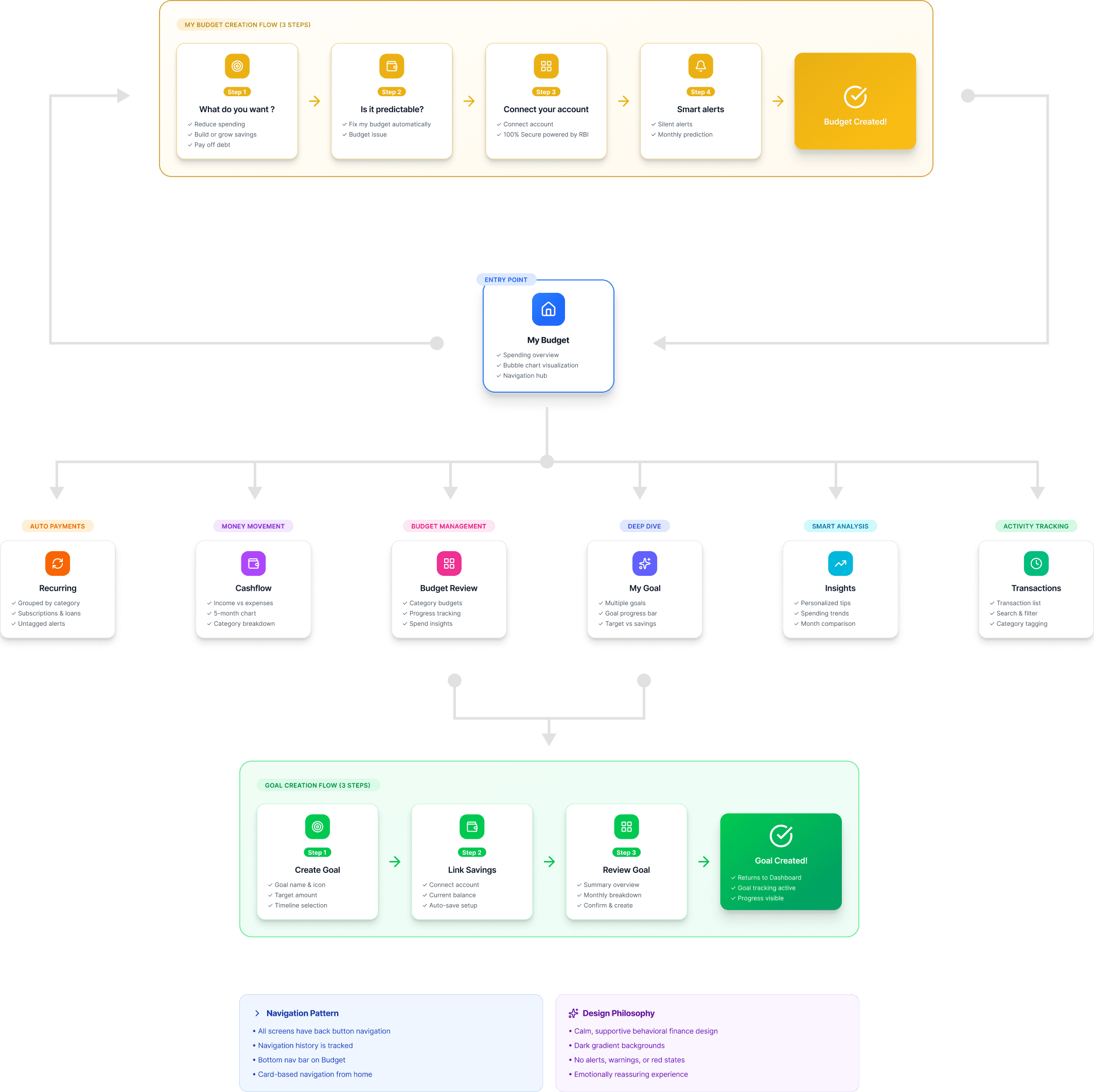
Userflow
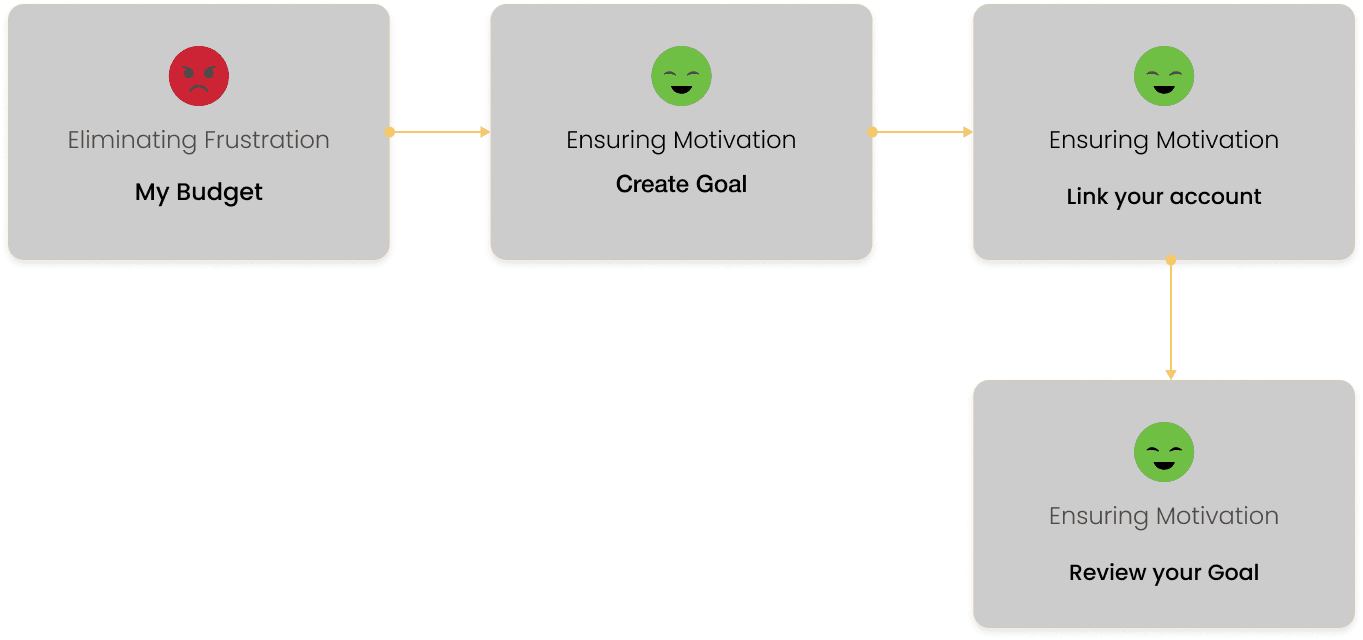
A step-by-step flow that captures user intent, automates setup via secure account linking, and surfaces insights without requiring manual effort.
Analysis bridged research and design, converting raw data into decisions grounded in real user needs.
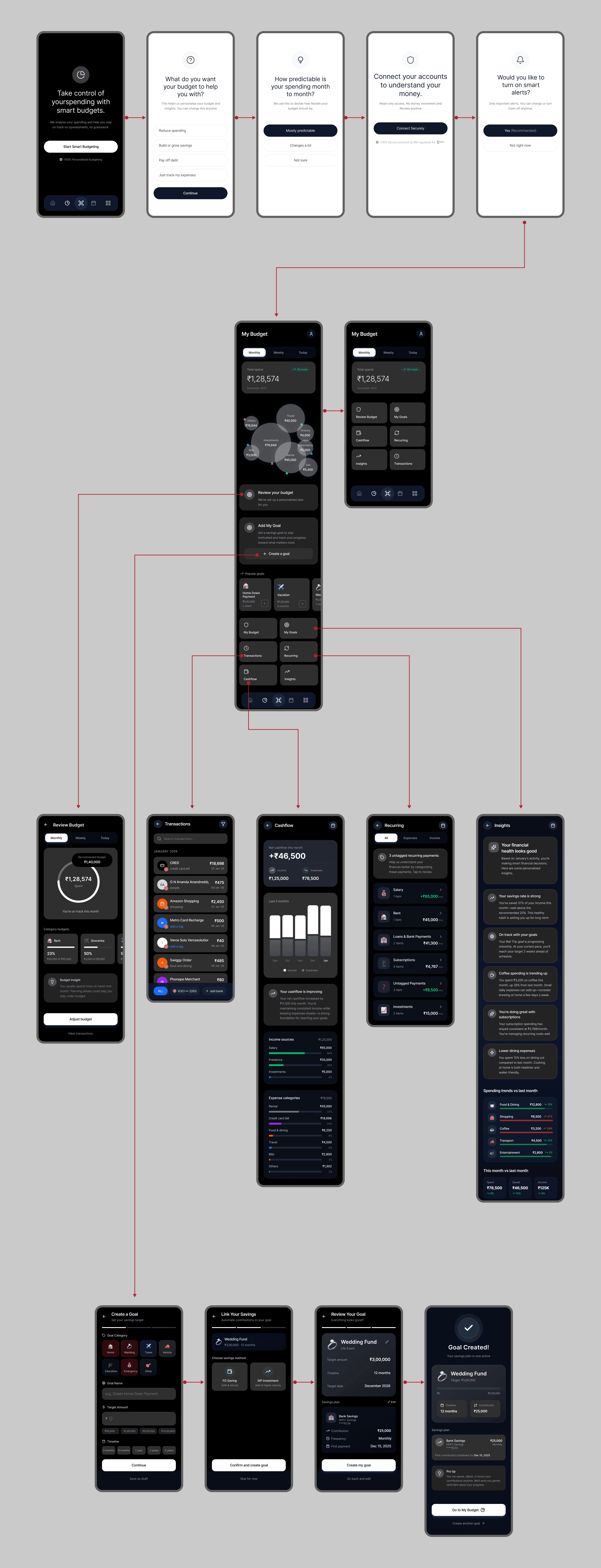
Wireframe
From fragmented behaviors and scattered signals, we distilled a single guiding experience. Wireframe represents the moment where complexity fades and a clear path forward emerges.
When the path is clear, progress feels effortless.
Usability Testing
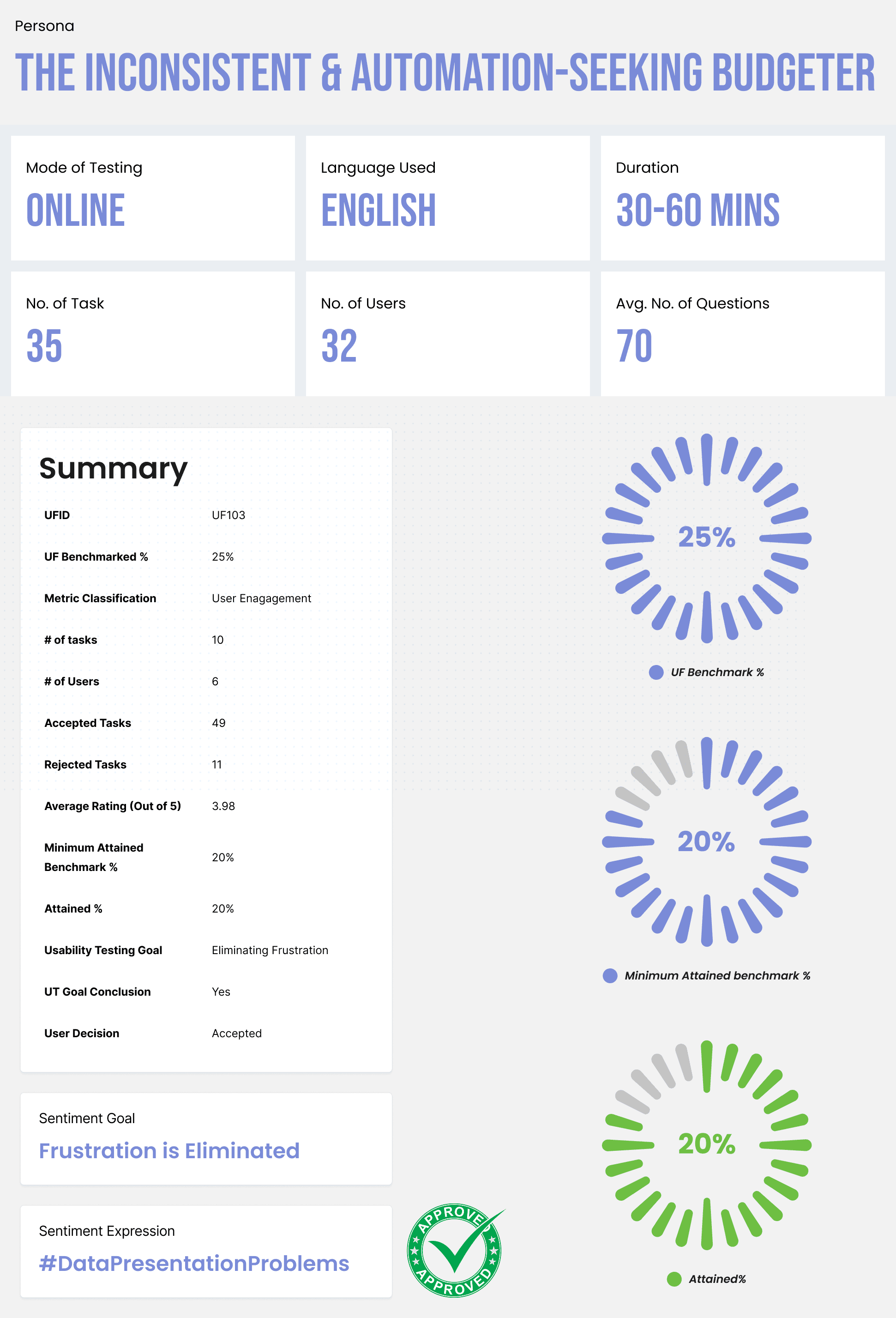
After validating the core flow through wireframes, we tested the experience with users to evaluate clarity, effort, and confidence at each step. The goal was to ensure the budgeting journey felt intuitive, supportive, and free from friction before moving into high-fidelity design.
Moderated Usability Testing one feature
Mood Board & Design Transformation
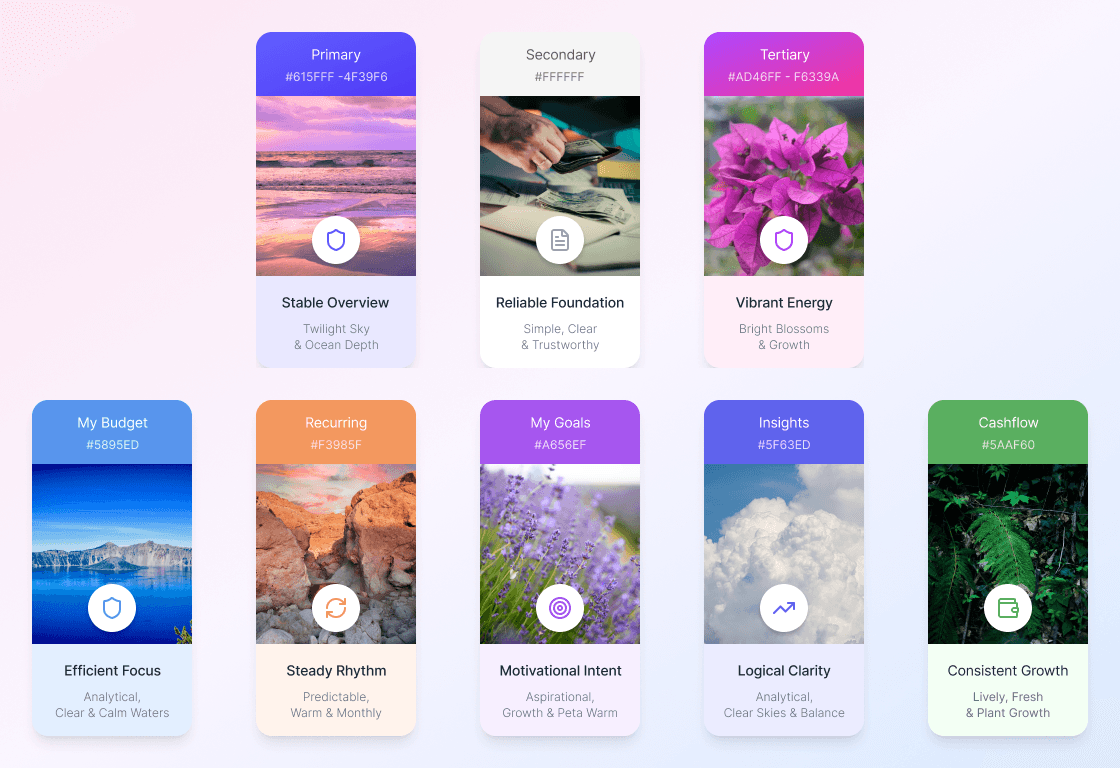
Based on user insights and validated flows, we translated functional wireframes into an emotional visual system. The design focuses on reducing anxiety, reinforcing trust, and guiding users from uncertainty to clarity mirroring the journey from dark to light established throughout the case study.
A calm, desaturated palette was selected to minimize cognitive load and support long-form financial review, replacing aggressive banking tones with a more approachable, while maintaining sufficient contrast to meet WCAG 2.1 accessibility guidelines.
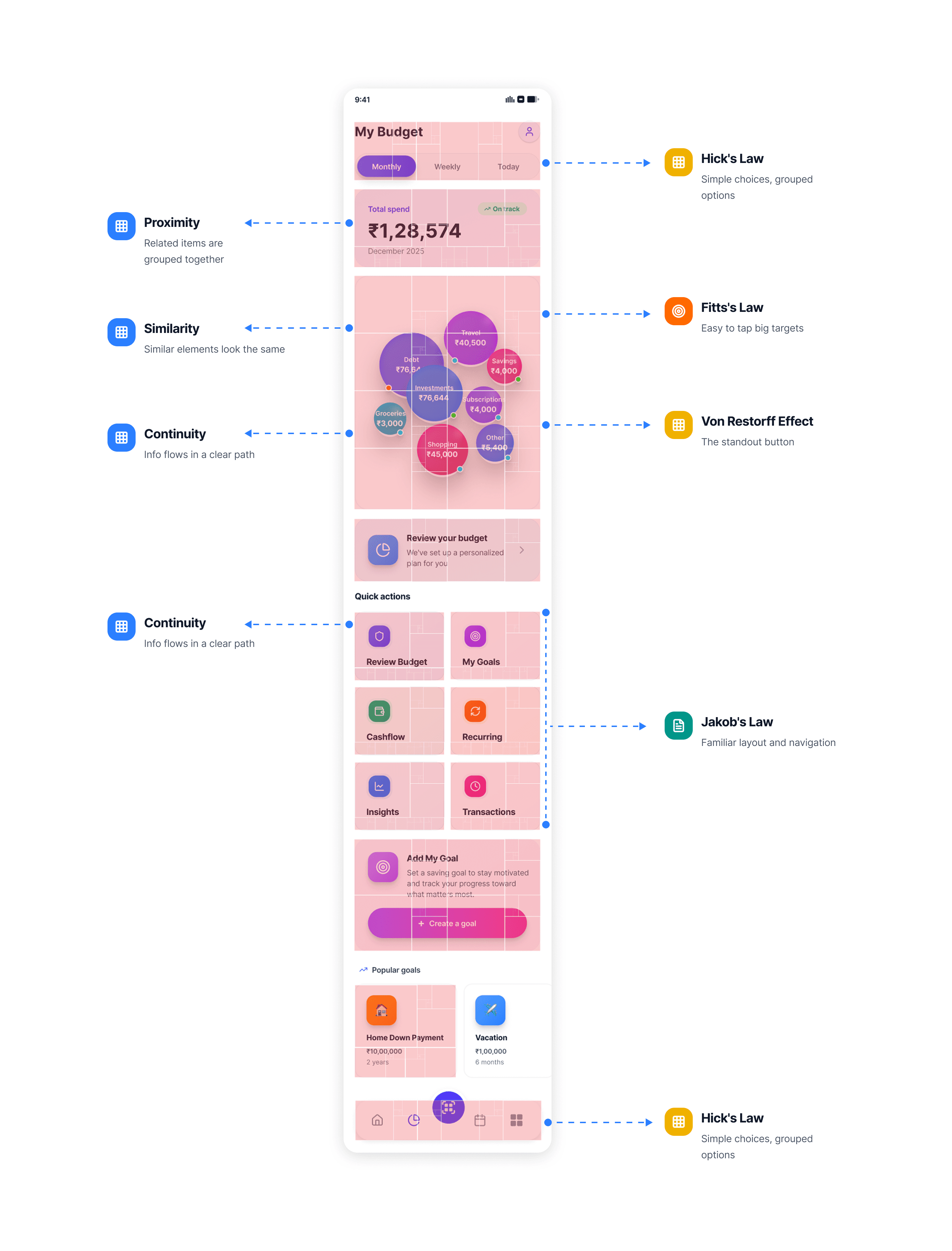
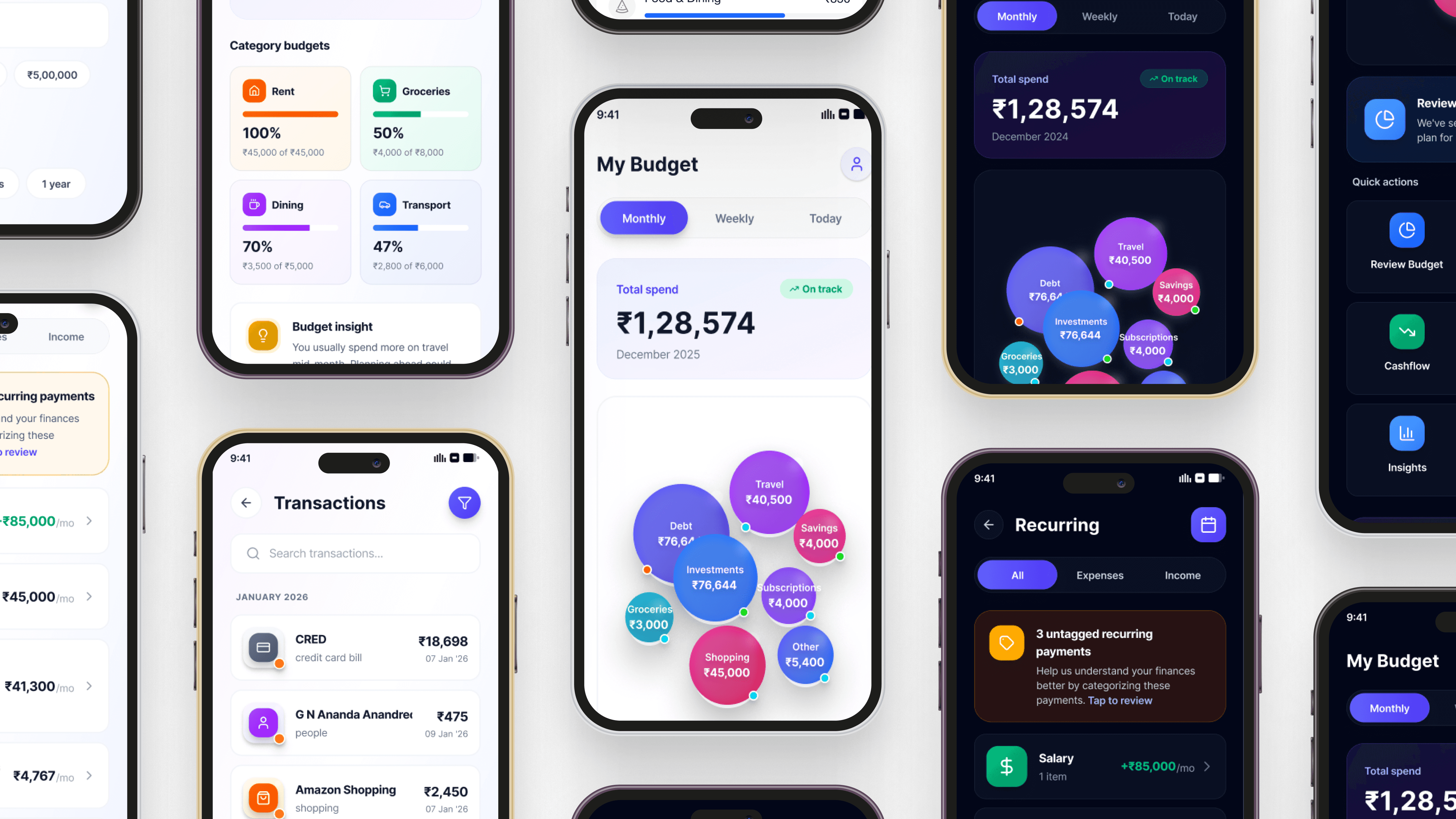
The budget section design focuses on clarity, emotional comfort, and ease of understanding. A soft color palette, rounded typography, and card-based layouts were chosen to reduce anxiety often associated with financial tracking. Generous spacing and clear visual hierarchy ensure users can quickly identify key insights while maintaining a calm and friendly experience.”
This budgeting interface is designed to present financial data with clarity and balance. A neutral visual foundation supports readability, while purposeful color use highlights actions and categories without distraction. Layout and spacing follow the Golden Ratio and core UX principles to create a natural flow, and aligned with WCAG 2.1 accessibility guidelines helping users understand their finances quickly and make confident decisions.
When the path is clear, progress feels effortless.
Clarity isn’t achieved by doing more it’s achieved by designing what matters.”
Closing the Journey
This case study intentionally concludes at Budgeting. While the broader product vision spans a complete financial ecosystem including dashboards, taxes, loans (both new and existing), and wealth management, we chose to focus deeply on budgeting to clearly demonstrate our design thinking, decision-making, and problem-solving approach. Budgeting emerged as the highest-friction yet most foundational moment in a user’s financial journey, where confusion, anxiety, and disengagement are most likely to occur. By narrowing our scope to a single, meaningful flow, we were able to uncover real user pain points through research, translate behavioral insights into structured and intuitive flows, and design calm, guided experiences that help users move from uncertainty to control. The visual metaphor of a ship reaching the light represents this moment of clarity where complexity gives way to confidence. This is not the end of the product vision, but a focused proof point of how the system, principles, and design philosophy can scale seamlessly across all other financial domains.